
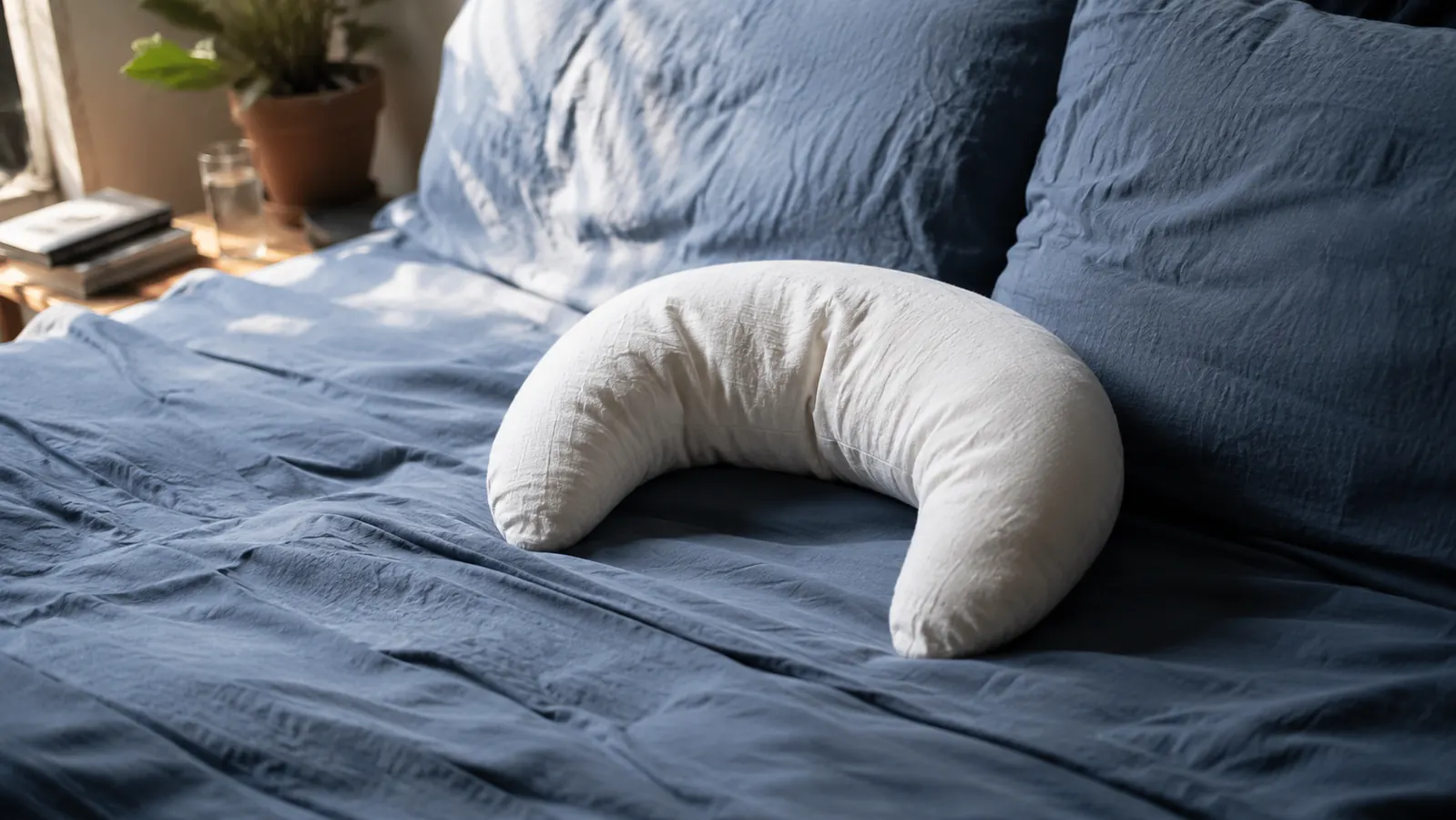
Here is the thing about 65,866 Amazon reviews: they are almost all written within the first thirty days. Someone receives the Coop Home Goods Original Crescent Adjustable Pillow, sleeps on it for two weeks, and types a glowing paragraph while the novelty is still fresh. What you don't get from that chorus is what happens at month three, or month six, or after you've actually run it through a washing machine. I've now had this pillow for just over six months. I can answer those questions. And some of the answers will surprise you, especially if the only thing you've read is the listing page.
To be clear: I am not here to trash the Coop Home Goods. At a 4.5-star average across nearly 66,000 ratings, the product is genuinely delivering for most people. But "most people" is not the same as "everyone," and the gap between those two groups is worth mapping carefully before you spend $99. I want to talk about who ends up returning this pillow, what the off-gassing window actually feels like to live through, why the fill compression curve looks the way it does after sustained use, and what happens to back sleepers who buy it based on a side sleeper's review.
The Quick Verdict
A legitimately good adjustable pillow with a clever shape, but the six-month picture is more complicated than the early reviews suggest. Worth it for committed side sleepers. Miscast for back sleepers and hot sleepers who don't know it yet.
Amazon Check Today's Price →You've probably already read the five-star reviews. Here's the price if you're ready to decide.
The Coop Home Goods includes a 100-night trial, which is the most important detail in this whole review. Use it. Check current availability and today's price on Amazon before you commit.
Amazon Check Today's Price on Amazon →The Off-Gassing Window: What Nobody Times
Every review mentions the smell. Almost none of them tell you how long it lasts. The Coop Crescent arrives vacuum-compressed, and when you open it, shredded memory foam begins off-gassing volatile organic compounds that produce a sweet, chemical smell somewhere between new car and a craft store. It is not dangerous. CertiPUR-US certification means the foam has been tested for heavy metals, formaldehyde, and ozone depleters. But the smell is real, and if you are chemically sensitive or share your bedroom with someone who is, you need a plan.
In my experience, the timeline went like this. Day one: strong. Day two with the cover off in a ventilated room: noticeably reduced. Day five sleeping on it with the cover on: faint but detectable when I pressed my face directly into the fabric. Day ten: gone for practical purposes. If you are planning to give this as a gift for someone with chemical sensitivities, unbox it and let it air for a full week first. If you're buying it for yourself and you're not particularly sensitive, two to three nights of sleeping with a window cracked is usually enough. The reviews that describe the smell as "terrible" are usually from people who opened the package and put it directly on the bed the same night. That is the wrong move with any compressed foam product.
Fill Compression: The Six-Month Reality
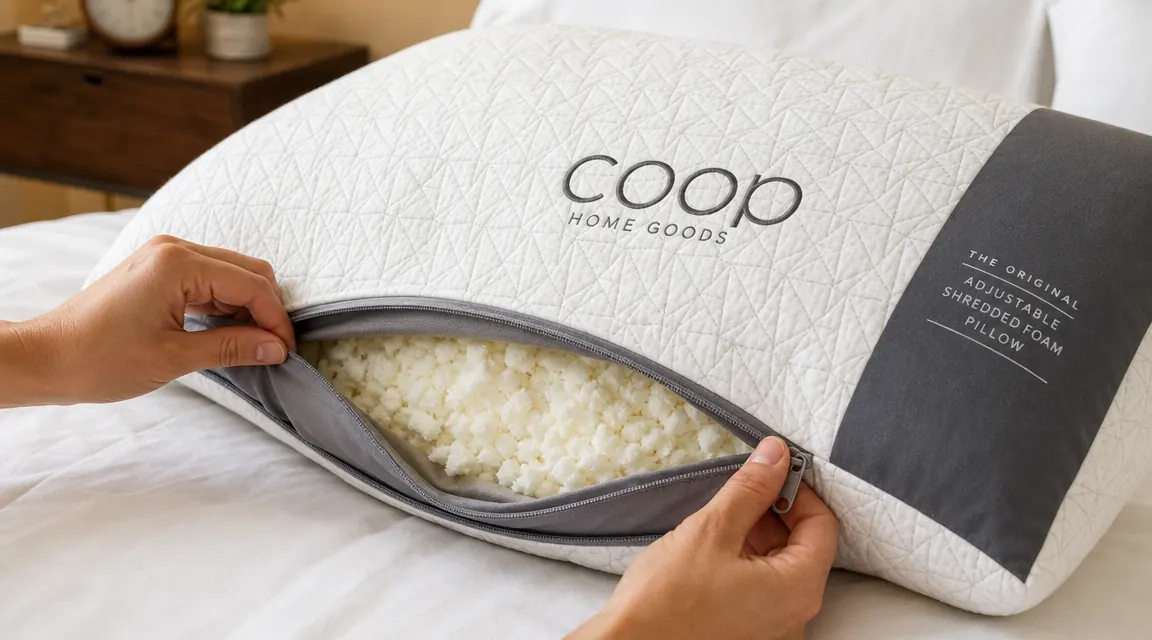
This is the part of the review that most early buyers simply cannot write yet. Shredded memory foam compresses under nightly pressure. The fibers that give it that satisfying springiness at the beginning are gradually breaking down microscopically over time. At week two, the Coop Crescent felt noticeably loftier than any previous pillow I'd owned. At month one, I pulled out a small amount of extra fill and was happy with where it landed. By month two, I was adding fill back in. By month four, I was adding fill again. By month six, I have gone through three separate fill adjustments to maintain roughly the same loft I had at the start.
None of this makes the pillow bad. This is how shredded foam works. The fill bag they include exists for a reason. But the marketing framing of "adjust it once to your preference" undersells the fact that your preference will need to be re-adjusted every six to eight weeks as the foam settles. This is annoying for people who expected a set-it-and-forget-it solution. It is not annoying for people who understood they were buying a maintenance-involved product. The question is which category you are in.
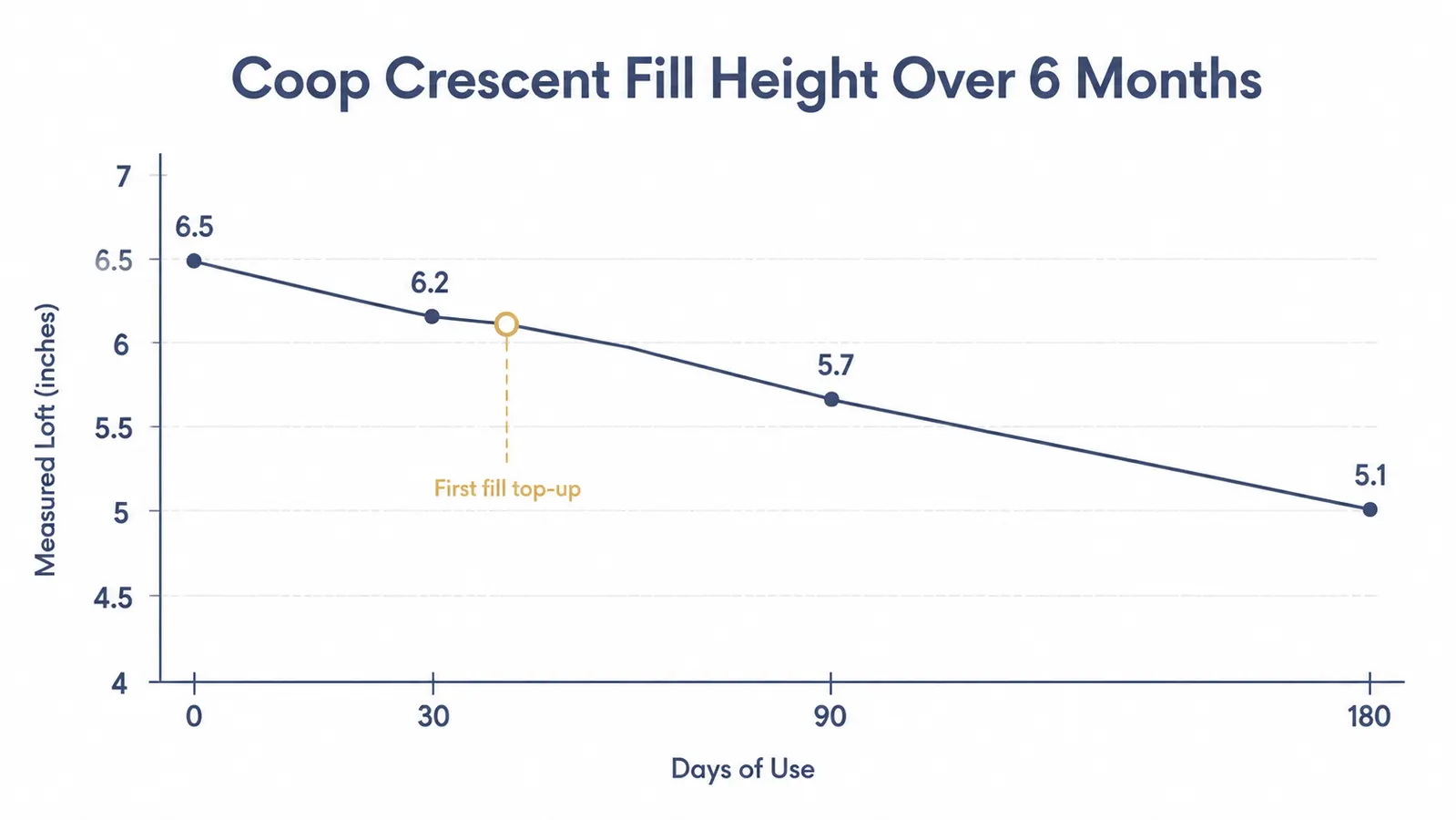
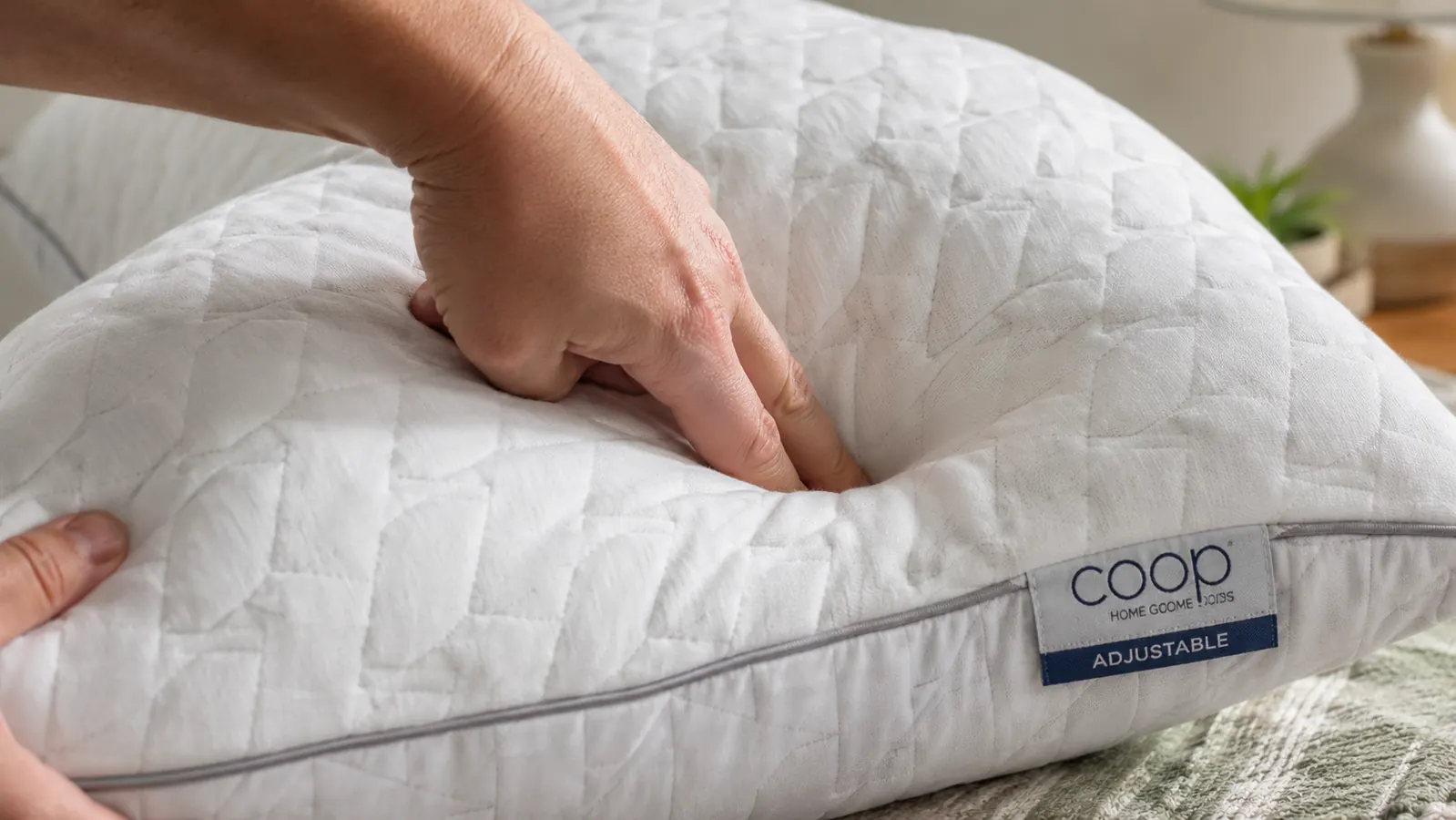
By six months, my measured loft had dropped from roughly 6.5 inches (my ideal starting height) to about 5.1 inches before my most recent refill. The total fill I removed in month one and then gradually added back over subsequent months is net roughly the same, which suggests the foam itself is compressing rather than migrating. If you want to understand the mechanics of this and dial in the adjustment properly, the guide on how to dial in a shredded foam pillow goes into the process in detail. The short version: keep the spare fill bag, measure your shoulder width before you start, and expect to revisit loft at least four times in the first year.
Who Returns This Pillow and Why
Having read through several hundred reviews in detail, including the one and two-star returns, three clear returner profiles emerge. They are worth naming because each one represents a legitimate mismatch between expectation and product, not a product defect.
The first returner is the hot sleeper who didn't realize memory foam retains heat. This comes up in probably thirty percent of the negative reviews. People who currently sleep on buckwheat, latex, or cooling gel pillows are accustomed to a surface that stays cool or actively draws heat away. Shredded foam does neither. The bamboo-derived viscose cover helps relative to a synthetic case, but the pillow surface will be noticeably warmer than a cooling alternative by the second half of the night. If you run hot and it bothers you, this pillow will bother you.
The second returner is the back sleeper who bought the crescent shape without understanding it was designed for side sleepers. I will come back to this in its own section, but the short version is that the crescent cutout that feels intuitive when your shoulder is tucked against it feels slightly awkward when you are flat on your back. Not painful, but not optimal either. Back sleepers who read "adjustable pillow" and stopped there sometimes end up disappointed.
The third returner is the person who was hoping adjustable meant immediately perfect. The Coop Crescent has a real break-in period. Night one through night four on this pillow, after adjusting fill, is not representative of what it will feel like at night fourteen. The foam needs time to conform to your specific head weight and sleeping position. Some people try it twice, don't feel the difference yet, and return it before the adjustment has had time to work. The 100-night trial window is generous specifically because this product requires patience to evaluate fairly.
Thirty percent of the negative reviews are from hot sleepers who bought a memory foam pillow and then were surprised that memory foam retains heat. That is a buying decision problem, not a pillow problem.
The Back Sleeper Question
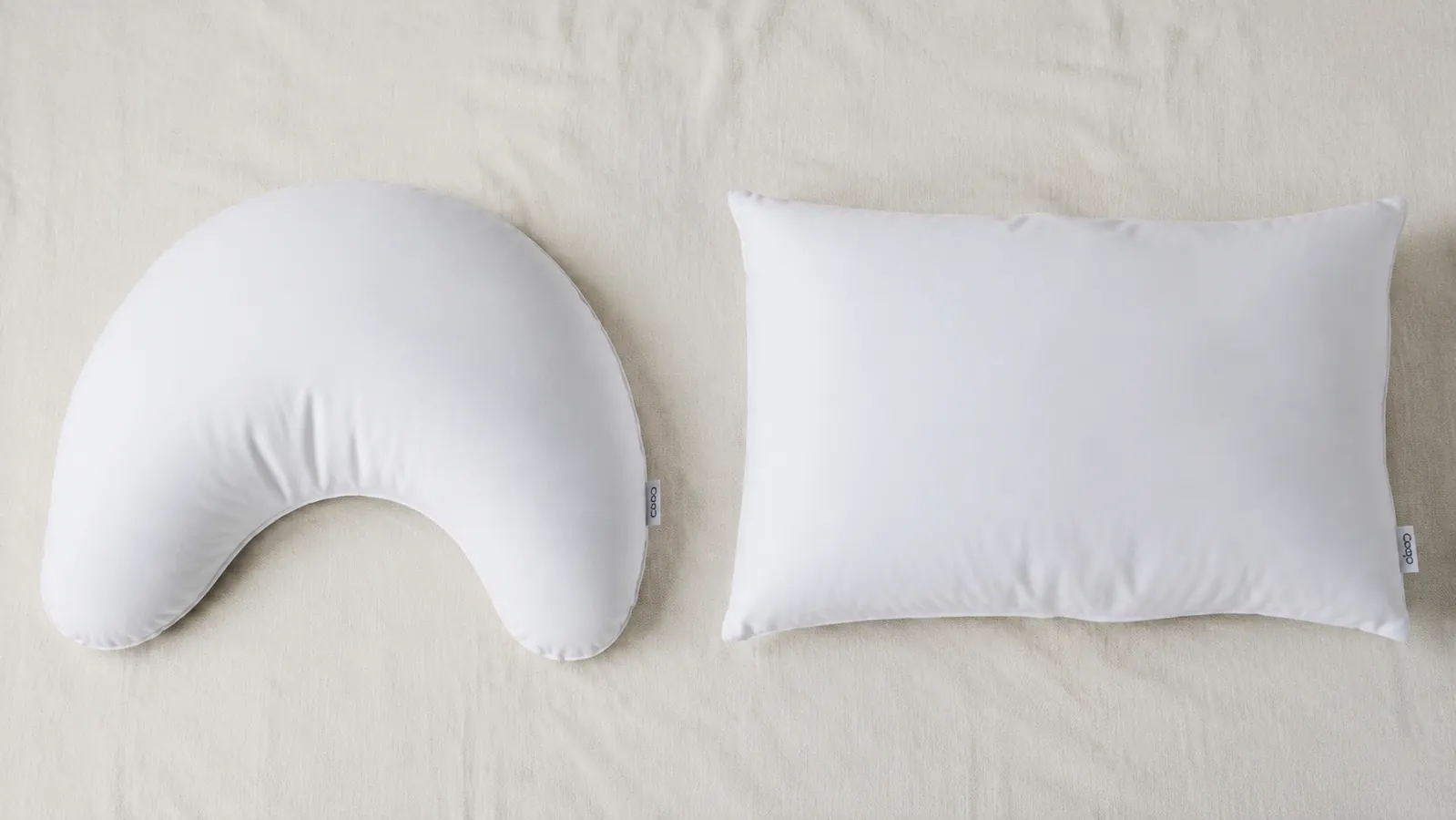
The Coop Crescent's meta description on Amazon says "shoulder and neck support," which is accurate but incomplete. The crescent notch is engineered around a very specific anatomical fact: when you sleep on your side, your shoulder is between your head and the mattress, and a flat pillow bottom edge presses against the top of that shoulder in a way that creates a slight upward angle to your neck. The notch eliminates that pressure point. For side sleepers, this is a genuine design advancement.
For back sleepers, the crescent cutout is essentially irrelevant. You are not bringing a shoulder into contact with the pillow edge. The pillow still functions as an adjustable shredded foam pillow, which is fine, but you are paying for a shape that provides no specific benefit to your sleep position. I tested the Coop Crescent on my back for two weeks during a period when I was having shoulder work done. It was a perfectly adequate pillow. It was not better than other adjustable pillows I've used as a back sleeper. If you primarily sleep on your back and you are drawn to this product specifically, read the Coop vs Purple Pillow comparison first, because the Purple handles position-agnostic support differently and may be a better match.
The combination sleeper situation is genuinely interesting. If you split roughly 70-30 between side and back, the crescent shape adds value for the dominant position without actively hurting you in the secondary one. If you flip 50-50, the loft you need for side sleeping will feel slightly elevated when you are on your back, and you will probably notice it.
Washing: The Part Nobody Tested Before Writing
The Coop Crescent's outer cover washes easily. Zip it off, run it on cool, tumble dry low, done. That part is fine. The inner pillow, which Coop says is also machine washable, is where things get interesting. I washed the full inner pillow at the three-month mark in a front-loading machine at a laundromat, because my building has only top-loaders with center agitators and Coop specifically recommends against those.
Results: the pillow came out of the wash with the fill significantly more compressed than it went in. Wet shredded foam collapses into a dense, heavy mass, and getting it fully dry is genuinely time-consuming. I ran it through two full dryer cycles with wool dryer balls and it still had a faint damp smell in the center. I finished drying it flat for six hours. After full drying, the fill was fluffed back up to near its pre-wash state, but it took additional loft restoration over the following week as the foam recovered. Total recovery time was about four days of nightly use.
Practical implication: budget a full day for washing the inner pillow. Do not do it the night before you need it. And be aware that if you are washing to address a hygiene concern, you will need to restore fill after drying, which means the pillow will feel different for a few nights afterward. It is not a disaster, but it is more involved than washing a down pillow.
What the 65,000 Reviewers Got Right
In the spirit of fairness, and because I have now spent six months with this pillow rather than six weeks: the majority opinion is not wrong. The crescent shape solves a real biomechanical problem for side sleepers, and no competitor has addressed it as directly. The fill adjustment system is genuinely the best I have used, with a tight inner zipper, clean removal, and an included storage bag for excess fill. The 100-night trial is meaningful and the return process is not onerous. The morning neck stiffness that I had chalked up to age and desk posture improved within about three weeks of using this pillow, which is the result that matters most.
The cover feels premium. The stitching has held through six months of nightly use and three cover washes without any pilling, fraying, or zipper issues. At $99, the pillow is priced at the high end of the adjustable category but not absurdly so given what you're getting. Cheaper shredded foam pillows exist, and most of them feel like it within two months.
What I Liked
- Crescent notch is a real anatomical solution for side sleepers, not a marketing gimmick
- Fill adjustment system is the best in class: clean, accessible, with a spare fill bag included
- CertiPUR-US certified foam, no heavy metals or harmful off-gassing compounds
- Cover is washable, durable, and has not pilled or frayed after six months
- 100-night trial period is long enough to actually evaluate it fairly
- Morning neck stiffness improved measurably within three weeks of dialing in loft
Where It Falls Short
- Off-gassing smell requires 5 to 10 days to fully clear, not the 24 hours some reviews suggest
- Fill compression is ongoing: expect three to four loft adjustments in the first year
- Runs warm, a meaningful drawback for hot sleepers who don't expect it
- Crescent shape adds no value for back sleepers and adds cost
- Inner pillow washing requires a front-loading machine and a full day to dry properly
- At $99, the price commitment is real even with the trial period
Who This Is For
Dedicated side sleepers with shoulder-adjacent neck pain who have been through at least two or three pillows and still wake up stiff. People who run cool to moderate in temperature and are not currently relying on an actively cooling pillow. Anyone patient enough to dial in fill over the first two weeks and willing to revisit loft every couple of months. If you have read your chiropractor's recommendation to change pillows and done nothing about it because the options feel overwhelming, this is a concrete answer with a 100-night safety net.
Who Should Skip It
Back sleepers who don't regularly side sleep. Hot sleepers who already struggle with pillow heat and currently use a cooling alternative. Anyone who wants a pillow that requires zero maintenance once set. People without access to a front-loading washer who have strong hygiene requirements for their bedding. And anyone who needs a pillow to feel perfect on night one, because this is a product that rewards patience and penalizes impatience.
Six months in, I still sleep on it every night. That should tell you something.
The 100-night trial is the right way to evaluate this pillow. You need at least six weeks before the fill settles and your neck adjusts. Check today's price on Amazon and use the trial period honestly before you decide.
Amazon Check Today's Price on Amazon →