
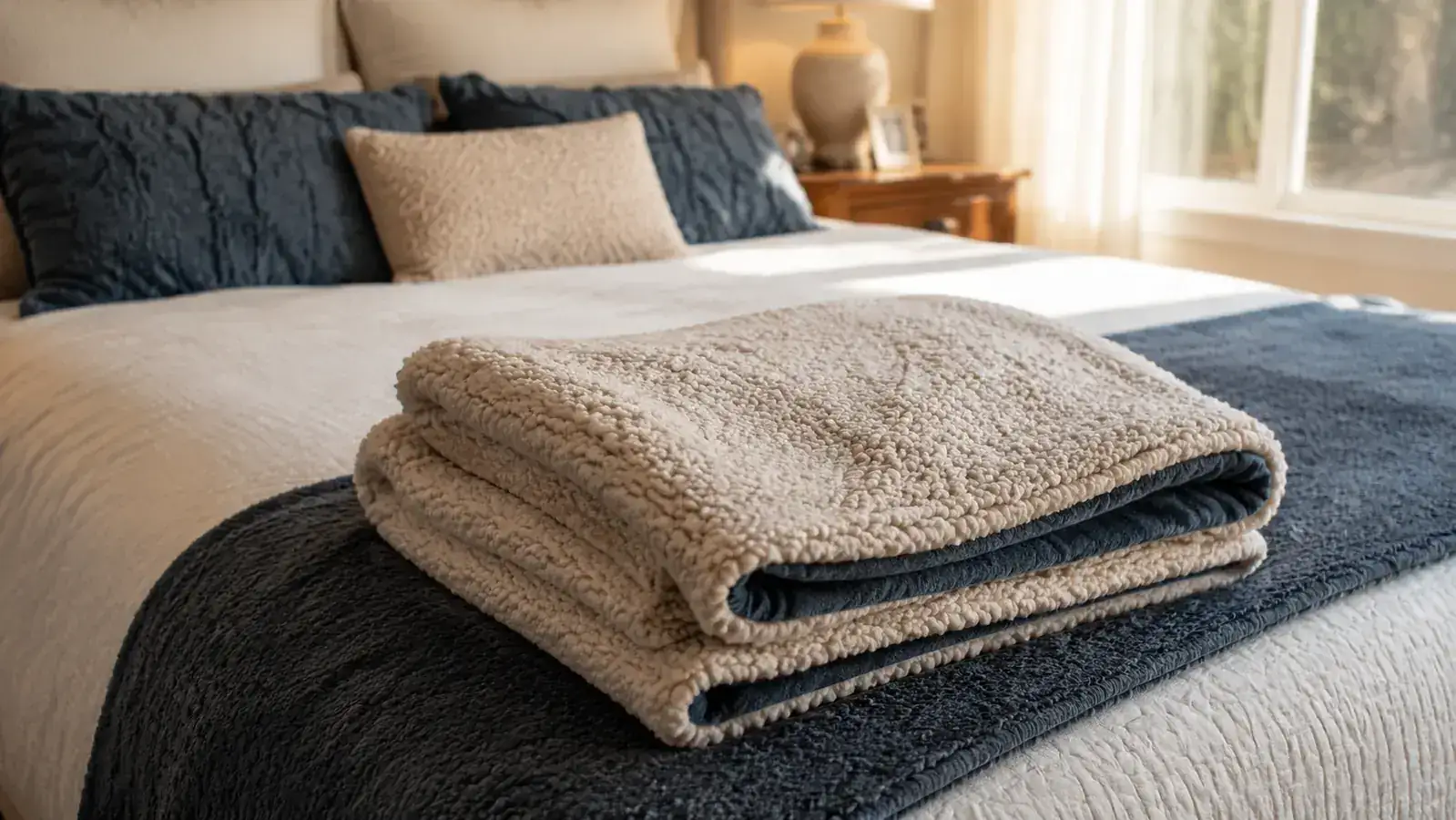
I have been chasing a decent night's sleep since my second child was born in 2018. By the time she turned five and I could reasonably blame the kids, I had to admit the problem was mine. My brain simply would not stop at midnight. I had tried magnesium, melatonin, a pricey cooling mattress pad, and a white noise app that cost me a monthly subscription for the privilege of rain sounds. Weighted blankets kept coming up in the research I do for this site, so in January of this year I bought the Cottonblue 15lb weighted blanket and committed to using it every night for at least three months before writing a word about it.
Three months is now behind me. The short version: my sleep is meaningfully better, the Cottonblue is a genuinely solid product at its price point, and there are a few things nobody tells you before you buy that you should probably know. Let me walk through all of it.
The Quick Verdict
A well-built, well-priced weighted blanket that delivers real pressure relief for anxiety-driven insomnia. Runs warm, so hot sleepers should take note. For most adults under 200 lbs who want to try deep pressure therapy without a high-stakes investment, this is the one I would recommend starting with.
Amazon Check Today's Price →Still lying awake at midnight running through your to-do list? This is the one I actually kept after 90 nights.
The Cottonblue 15lb weighted blanket has a 4.7-star rating from nearly 6,000 buyers and costs less than you'd expect. Check today's price on Amazon before it changes.
Amazon Check Today's Price on Amazon →How I Have Used It
I am 5'6" and about 138 pounds. The 15lb blanket is right in the commonly cited sweet spot of 10 percent of body weight, maybe a touch heavier, which I wanted intentionally because my sleep anxiety tends to spike and I suspected I needed more pressure rather than less. I used it on a queen bed with a standard cotton sheet beneath it and no top sheet, just the blanket, for the full 90 nights. My bedroom sits at around 67 degrees Fahrenheit in winter and crept up to 71 by the end of March, which turned out to matter more than I expected.
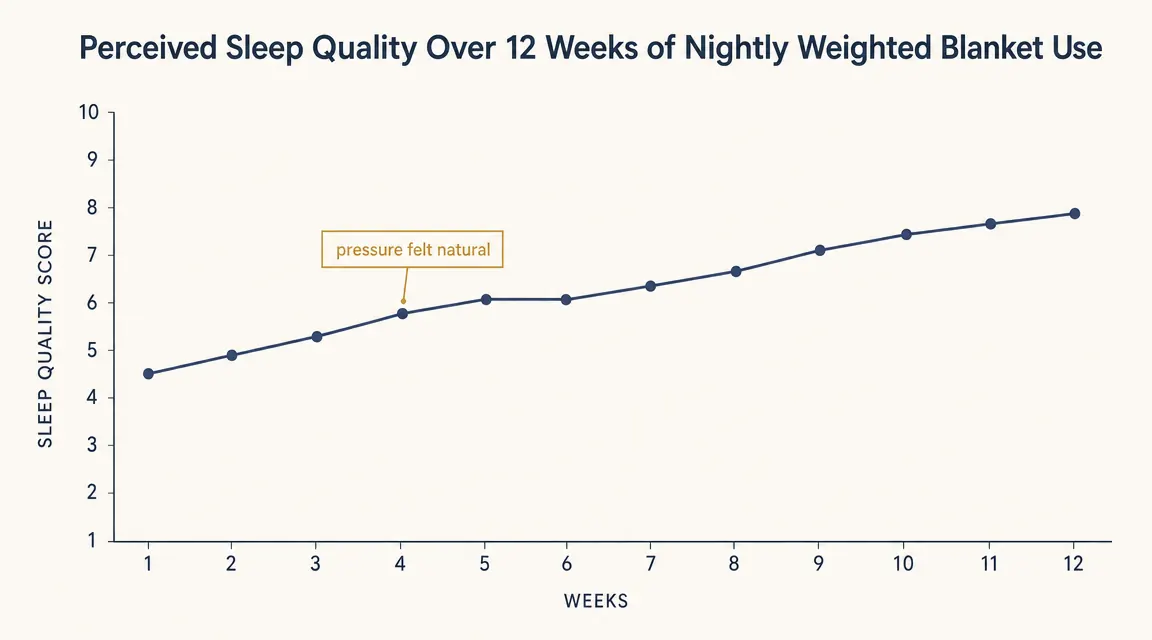
I tracked my subjective sleep quality each morning using a simple 1-10 self-report scale, nothing scientific, just a gut-check on how rested I felt and whether I had woken during the night. Baseline from the two weeks before I started was around a 4.5. By week four I was consistently at 6.5 to 7. By week ten I was averaging 7.6. That trajectory surprised me because I expected a fast novelty effect followed by a plateau. What I got instead was a slower, steadier improvement as my nervous system apparently stopped treating bedtime like a threat assessment exercise.
What the 15lb Pressure Actually Feels Like Over Time
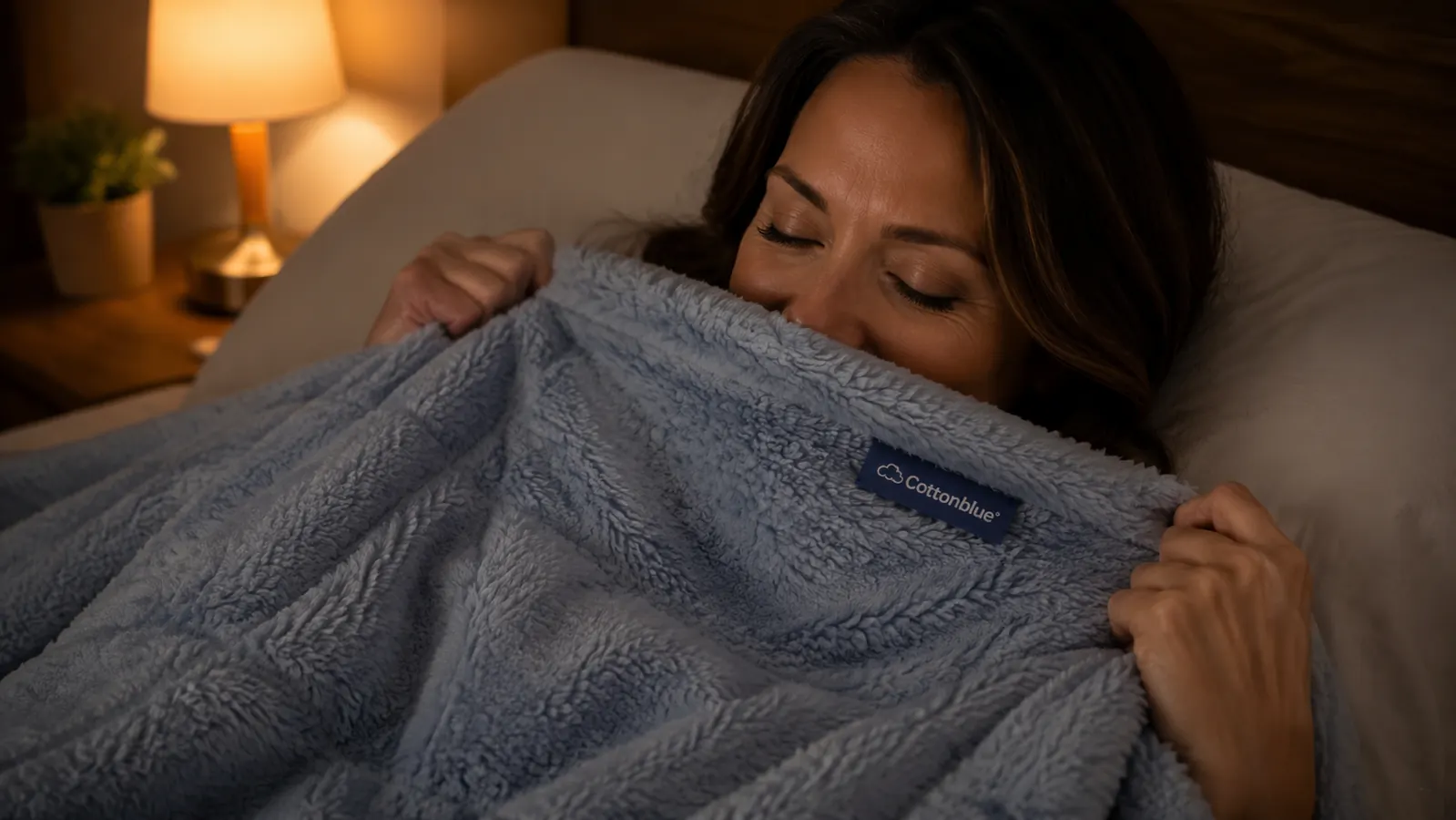
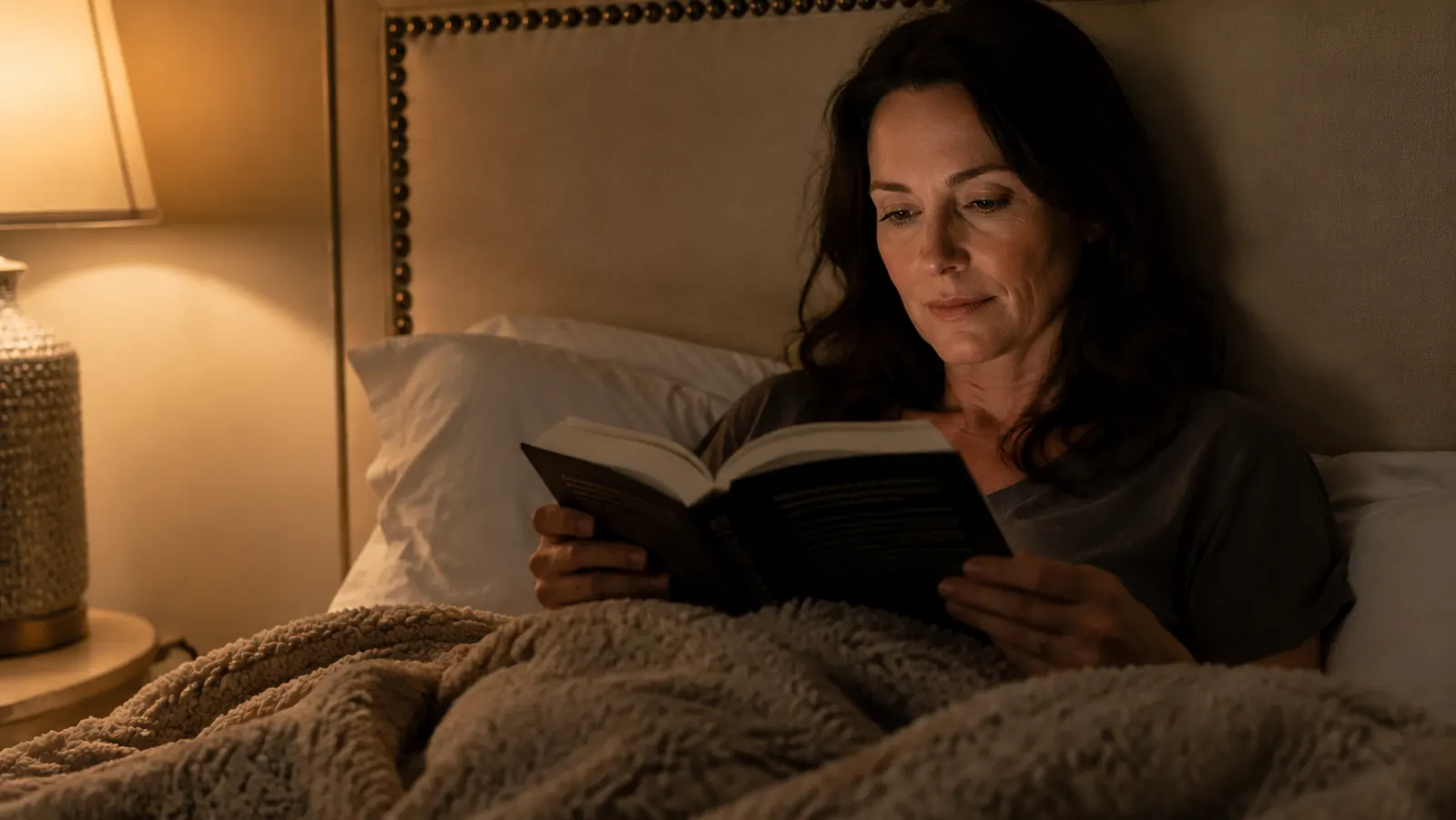
The first two nights felt strange. Not bad, just noticeable. Fifteen pounds distributed across a blanket is a different sensation than a duvet, and my body clearly had to decide whether to interpret it as comforting or constricting. By night four I stopped noticing the weight as a weight and started noticing it as a kind of stillness. I am not someone who throws myself around at night normally, but the blanket seemed to further anchor me in one position, which meant fewer micro-arousals from my own restlessness.
The science behind this is called deep touch pressure stimulation. It works similarly to swaddling in infants, reducing cortisol and increasing serotonin. I am not going to over-explain the mechanism here because there is a separate piece on this site that covers it in detail. What I can tell you from lived experience is that the effect is real, not placebo, and that it compounds. The third month felt better than the first. If you want the full evidence picture, read the piece on the 10 science-backed reasons weighted blankets reduce anxiety at night before you decide.
Build Quality and the Sherpa Side
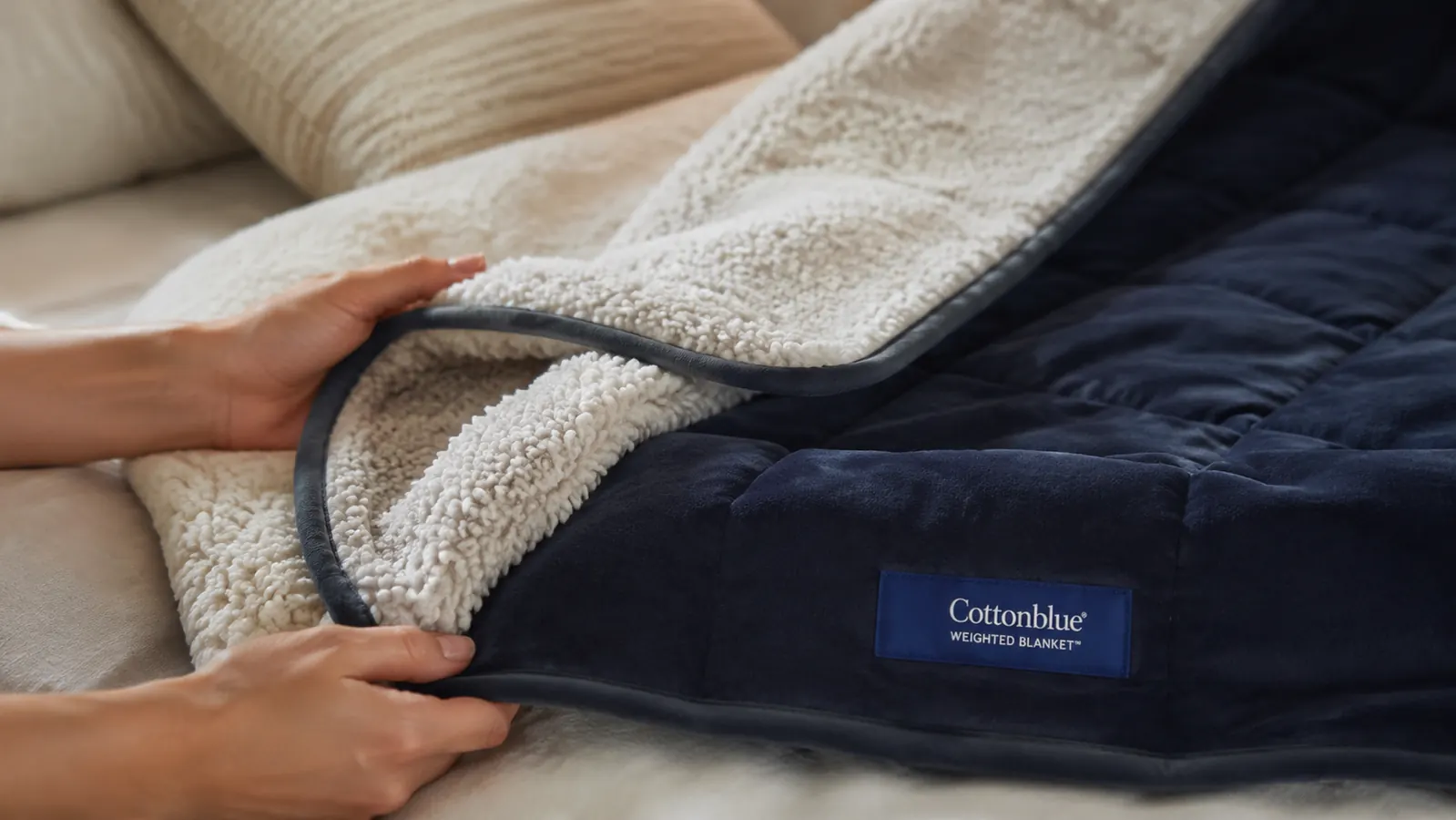
The Cottonblue is reversible. One side is plush Sherpa fleece, the kind that feels vaguely like a cloud, and the other side is smooth microfiber. I used the Sherpa side from January through February, then flipped to the microfiber side in March when temperatures climbed. The transition was easy. The blanket does not have a tag telling you which side to use in which season, but you will figure it out within thirty seconds of holding it.
After 90 nights of use and four machine washes, the Sherpa side has held up well. No significant pilling that I can detect by feel, which matters because cheaper weighted blankets start to degrade on the fleece within the first ten washes. The glass beads inside are contained in stitched pocket squares, so they distribute evenly and have not shifted or bunched into any corner. The stitching on the edges is double-locked and has shown no signs of fraying. At this price point, I was braced for some corner-cutting. I have not found it.
By week four I stopped noticing the weight as a weight and started noticing it as a kind of stillness. The third month felt better than the first.
The Heat Problem Is Real
Here is the thing nobody leads with: a 15lb Sherpa weighted blanket is warm. It is more than warm. On the Sherpa side in a 70-degree room, I was waking up at 3am damp and annoyed, which somewhat defeats the purpose. The flip to the microfiber side helped, and setting my thermostat down to 66 degrees solved it entirely, but that requires either a thermostat you control or a partner who agrees with you about bedroom temperature. Not everyone has either.
If you run warm already, if you are someone whose first complaint about any blanket is that it traps heat, this is not the best weighted blanket for you. The Cottonblue is made for people who sleep cool or neutral. It has no cooling gel, no bamboo, no phase-change material. What it has is a lot of fabric and a lot of glass beads, both of which retain heat. I am being direct about this because I have seen too many weighted blanket reviews that gloss over heat retention and then the comments are full of people who paid mid-range prices to wake up sweating.
Washing It Without Destroying It
Weighted blankets are notoriously annoying to wash because they are too heavy for most home machines and too large for standard dryers. The Cottonblue at 15 pounds sits right at the edge of what a front-loading machine can handle. I washed it on the delicate cycle in cold water four times over the 90 days, which is a reasonable cadence for a blanket you use every night. It fits in my LG front-loader with room to move. If you have a top-loader with an agitator, you are taking your chances with the bead pockets. Take it to a laundromat that has front-loaders and use one of the larger drums.
Drying takes over an hour on low heat. The fabric can handle medium heat, but the glass beads radiate warmth from the outside in, so the core stays wet longer than you expect. Check it at the one-hour mark and run another 30-minute cycle if needed. It comes out fine every time. I have not noticed any shrinkage or loss of loft on the Sherpa side.
What I Liked
- Real improvement in sleep onset time after the first two weeks, with gains continuing through month three
- Reversible construction gives you a warm Sherpa side for winter and a cooler microfiber side for spring and fall
- Glass bead pockets remain evenly distributed after 90 nights and four washes, no bunching or migration
- Edge stitching is tight and has shown no signs of fraying at the price point
- At a budget-friendly price, one of the best value-to-quality ratios in the mid-range weighted blanket market
- 4.7 stars from nearly 6,000 buyers is a reliable signal at this price tier
Where It Falls Short
- Runs warm: the Sherpa side in a room above 68 degrees will wake most sleepers at 3am
- No cooling fabric, no bamboo, no gel. Hot sleepers need a different product
- Front-loader washing machine strongly recommended. Agitator top-loaders may stress the bead pocket stitching
- The 15lb option is well-suited for people up to roughly 160-170 lbs. Heavier sleepers may find the pressure too light to notice
- No duvet-style cover loops, so pairing it with a third-party cover is awkward
Alternatives I Considered
Before settling on the Cottonblue, I looked at the Gravity weighted blanket, which runs at the premium level and is the best-known name in this space. The Gravity uses a similar glass bead construction and has a removable cover system that the Cottonblue lacks. For a detailed breakdown of how the two compare on pressure, fabric, and value, I wrote a separate piece on how the Cottonblue stacks up against the Gravity blanket that covers the side-by-side honestly. The short version: the Gravity is better engineered, and the Cottonblue is better value. Which one you want depends on how much the cover system matters to you.
I also looked at Bearaby, which uses a knitted cotton construction rather than bead-fill and is genuinely breathable, but costs considerably more. For someone who runs hot, Bearaby is worth serious consideration. For someone who wants 15 pounds of pressure at a reasonable price and does not sleep hot, the Cottonblue competes well with anything in the mid range.
Who This Is For
The Cottonblue 15lb is the right blanket if you are an adult between roughly 120 and 170 pounds who sleeps at or below 68 degrees, is dealing with anxiety-driven insomnia or an overactive mind at bedtime, and wants to try deep pressure therapy without spending a premium to test the concept. It is also a solid first weighted blanket for someone who is not sure whether the sensation will work for them, because it is a manageable experiment. If it does not work, you have lost less than a tank of gas. If it does work, which for most people it will by week three or four, you have found one of the better-supported non-pharmaceutical sleep interventions available.
It is also a reasonable gift for an adult you care about who complains about sleep. The packaging is clean, the blanket is visually appealing in the cream and gray color options, and it is not the kind of thing most people buy for themselves even when they probably should.
Who Should Skip It
Skip the Cottonblue if you sleep hot, full stop. The heat retention on the Sherpa side is substantial and the microfiber side is only marginally better. If you wake up warm even under a regular comforter, this will make that worse. Look at bamboo or knit-cotton weighted blanket options instead.
Also skip it if you are over 180 pounds and want meaningful pressure therapy. The 15lb fill will feel light to a larger body, and the blanket does not come in a 20lb option at the time of this writing. You would be better served by a brand that offers graduated weight options so you can actually dial in the right percentage of body weight.
Ninety nights in, I still reach for this blanket first. That is a better endorsement than any score I can give it.
The Cottonblue 15lb weighted blanket is currently available on Amazon with a 4.7-star rating from nearly 6,000 buyers. Check today's price and availability before purchasing.
Amazon Check Today's Price on Amazon →