
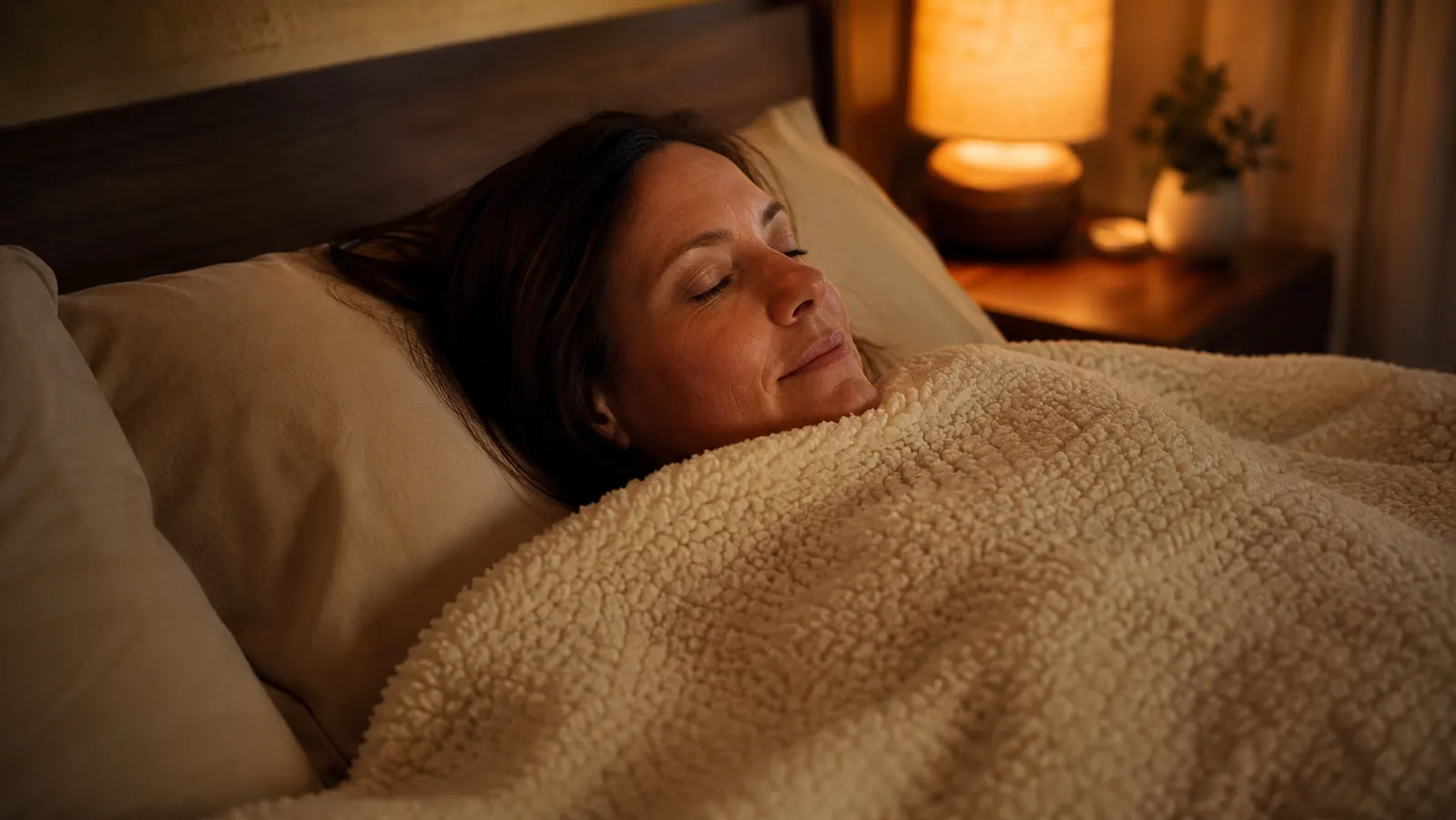
I spent most of my 30s lying awake at 2am with a brain that absolutely refused to cooperate. I tried white noise, sleep apps, herbal teas with names that sounded like spells. Some of them helped, a little, sometimes. The weighted blanket was different. Within a week I understood, at a physical level, why it was working in a way nothing else had. Turns out there's actual science behind it, not just the vague reassurance that it's "like a hug." Here are the 10 reasons it works, and why they matter for people whose sleep problems start in their nervous system.
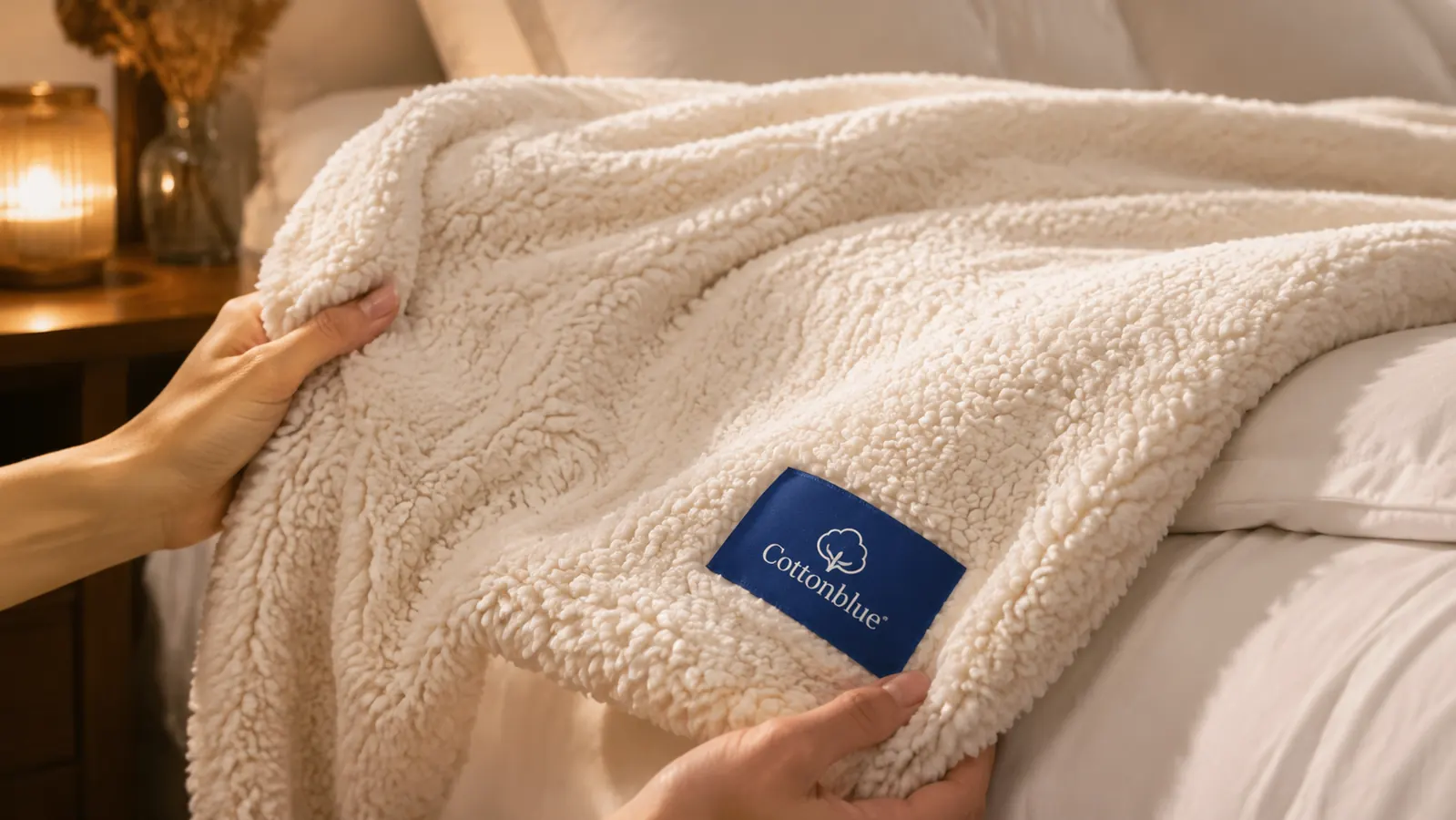
The blanket I've been using is the Cottonblue 15lb weighted blanket, rated 4.7 stars across nearly 6,000 reviews. It's plush sherpa on one side, soft cotton on the other, and it's affordably priced. I've had it six months and I still reach for it every single night.
If your brain won't quiet down at bedtime, 15 pounds of even pressure is worth trying before you call the doctor.
The Cottonblue 15lb weighted blanket has 4.7 stars from nearly 6,000 buyers. Plush sherpa, washable, budget-friendly. Check the current price before reading on.
Amazon Check Today's Price on Amazon →Deep Pressure Stimulation Slows Your Nervous System Down
Weighted blankets work through something called deep pressure stimulation, or DPS. The even, distributed weight across your body signals the nervous system to shift from sympathetic mode (fight-or-flight, which is what keeps you staring at the ceiling) to parasympathetic mode (rest-and-digest, which is what lets you actually sleep). It's the same mechanism behind why firm hugs calm crying children, why swaddling works for newborns, and why anxious dogs sometimes respond to pressure vests. Your nervous system doesn't care how old you are. Firm, even pressure tells it to calm down. A 15-pound blanket delivers that signal across your entire body at once.
It Raises Serotonin Without a Prescription
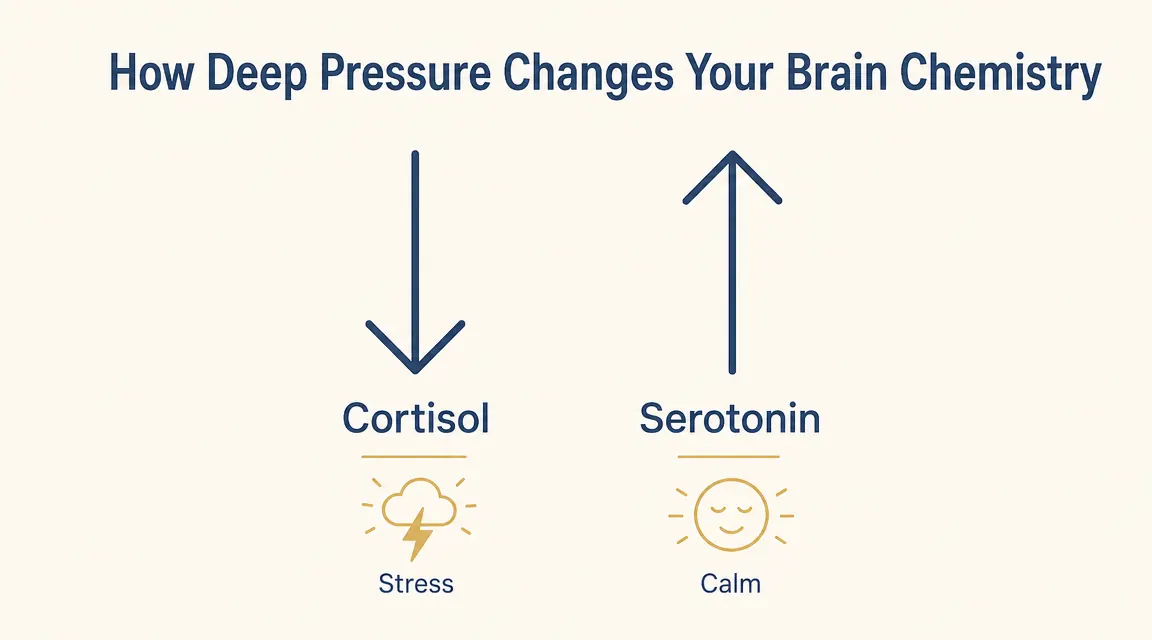
Multiple studies have found that deep pressure stimulation increases serotonin levels. Serotonin is the precursor to melatonin, the hormone your brain needs to initiate sleep. So when your body gets consistent pressure input, it nudges the serotonin-to-melatonin pathway in a direction that's genuinely useful at 11pm. This isn't a supplement you swallow and hope works. It's a mechanical input that triggers a biochemical response. The blanket is the delivery system.
It Reduces Cortisol, the Hormone That Literally Keeps You Awake
Cortisol is the stress hormone. When you're anxious at bedtime, your cortisol is elevated, and elevated cortisol actively suppresses sleep onset. It's not a coincidence that anxious people are bad sleepers. The two are biochemically linked. Research on DPS has shown measurable reductions in salivary cortisol after weighted blanket use. Less cortisol in the evening means your body can actually follow through on the sleepiness you already feel. The weighted blanket isn't sedating you. It's removing the thing that was blocking sleep.
The Weight Reduces Nighttime Movement, Which Deepens Sleep Stages
Restless sleepers shift positions dozens of times per night, often without fully waking but still disrupting slow-wave and REM sleep. A weighted blanket adds enough resistance that you naturally move less. This isn't uncomfortable restriction, it's more like you're gently anchored. Fewer position shifts mean fewer micro-arousals, which means more time in the deeper stages of sleep where recovery actually happens. If you wake up tired after seven hours, this mechanism is worth understanding.
It Gives the Tactile System Something to Process So the Mind Stops Churning
Anxious minds often race at bedtime because they have nothing concrete to do. There's a school of thought in occupational therapy that giving the tactile system something firm and consistent to process redirects cognitive load away from rumination. Put another way: your brain has limited bandwidth. If your skin is receiving steady, organized pressure input, there's genuinely less bandwidth available for the 2am thought spiral about the email you should have sent differently. This is one of the reasons weighted blankets were first used with children who had sensory processing challenges, and it translates directly to adult anxiety insomnia.
The Warmth Effect Lowers Core Body Temperature (Counterintuitively)
This one surprised me. When you're warm under a blanket, blood vessels near the skin dilate, which helps heat escape from your core. Your core body temperature dropping by even half a degree is a key physiological trigger for sleep onset. A plush weighted blanket like the Cottonblue's sherpa side creates a warm microclimate that, paradoxically, helps your core cool. If you run hot, the cotton side is the better choice. Either way, the effect on core temperature is part of why you feel drowsy under a heavy blanket in a way you don't under a thin sheet.
It Helps with Middle-of-the-Night Wake-Ups, Not Just Sleep Onset
Anxiety-driven insomnia often shows up not at bedtime but at 3am, when you wake for no clear reason and then can't get back down. The weighted blanket is already on you at that point. The proprioceptive input it delivers as you settle back into position is calming in the same way it was at bedtime. Several users in the Cottonblue long-term review specifically mentioned that the biggest benefit wasn't falling asleep but going back to sleep. That's the part that's hardest to solve with supplements or timing tricks alone.
15 Pounds Is the Research Sweet Spot for Most Adults
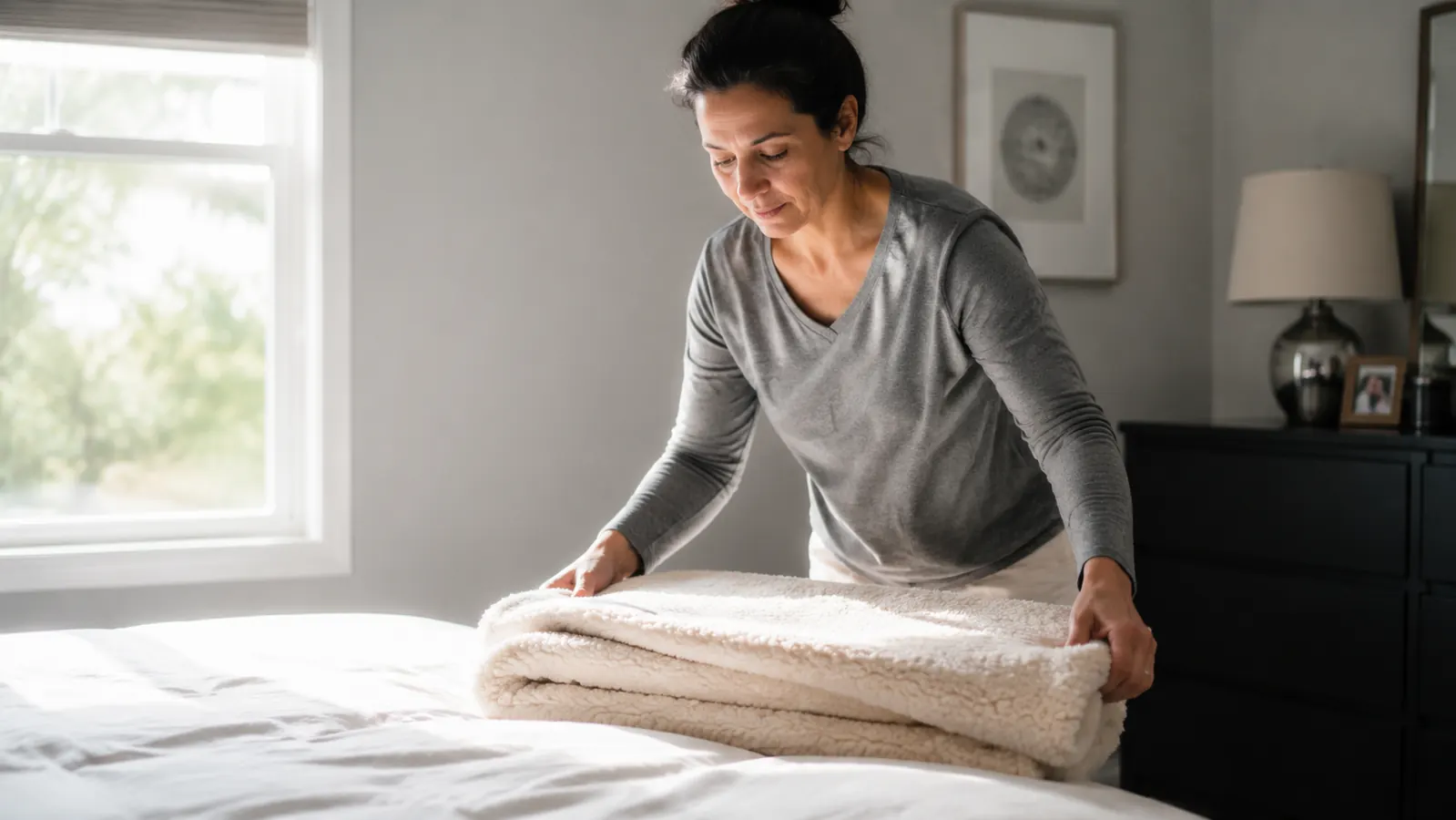
The occupational therapy guideline that gets cited most often is 10% of body weight, give or take a pound or two. For most adults in the 130-180lb range, that lands squarely at 15 pounds. Too light and you lose the proprioceptive signal. Too heavy and the effort of moving it wakes you up further. The Cottonblue 15lb is built to hit that target for the majority of buyers. If you're notably lighter or heavier, weight sizing matters more than brand, but for most people, 15 pounds is the right call without overthinking it.
It Has No Interaction Risk, Unlike Supplements or Medication
I'm not anti-supplement. I've tried magnesium glycinate, L-theanine, ashwagandha, and a few things I've already forgotten the names of. Some helped at the margins. But all of them come with the question of interactions, dosing, and the fact that your liver has to process them. A weighted blanket has none of those considerations. You put it on, it either works or it doesn't, and if it doesn't, you return it. The Cottonblue has a standard Amazon return window. There's no titration, no tolerance buildup, no deciding whether to keep taking it long term. For people who are already cautious about what they put in their body, this matters.
The Ritual Effect: Having Something to Do at Bedtime Reduces Anticipatory Anxiety
One underrated benefit is behavioral. Many poor sleepers develop anticipatory anxiety about sleep itself. The bedroom becomes associated with frustration rather than rest, which makes falling asleep harder before you've even tried. Adding a weighted blanket changes the ritual. There's a new sensory input, a new physical cue that tells your body something different is about to happen. Over two to three weeks, that cue builds its own association with calm. It's not magic, it's classical conditioning. You're giving your body a new anchor. If you want the full picture of how the Cottonblue performs over months, the personal account of three years of bad sleep ending is worth reading first.
What I'd Skip
Weighted blankets are not a treatment for clinical sleep disorders. If you have sleep apnea, a diagnosed anxiety disorder requiring medication, or restless leg syndrome, a blanket alone won't fix those things. It might still help at the margins, but don't buy one expecting it to do the work of a medical intervention. Also: if you sleep hot and run the thermostat above 70, start with the cotton side rather than the sherpa, or you'll spend the first two weeks sweaty and annoyed before you ever get to the actual benefit.
The blanket isn't sedating you. It's removing the thing that was blocking sleep in the first place.
Ready to try 15 pounds of pressure against a racing mind? The Cottonblue is the one I'd start with.
4.7 stars, nearly 6,000 reviews, machine washable sherpa, mid-range pricing. If it doesn't work, Amazon's return window is straightforward. Worth one week of honest testing before you write off the whole category.
Amazon Check Today's Price on Amazon →