
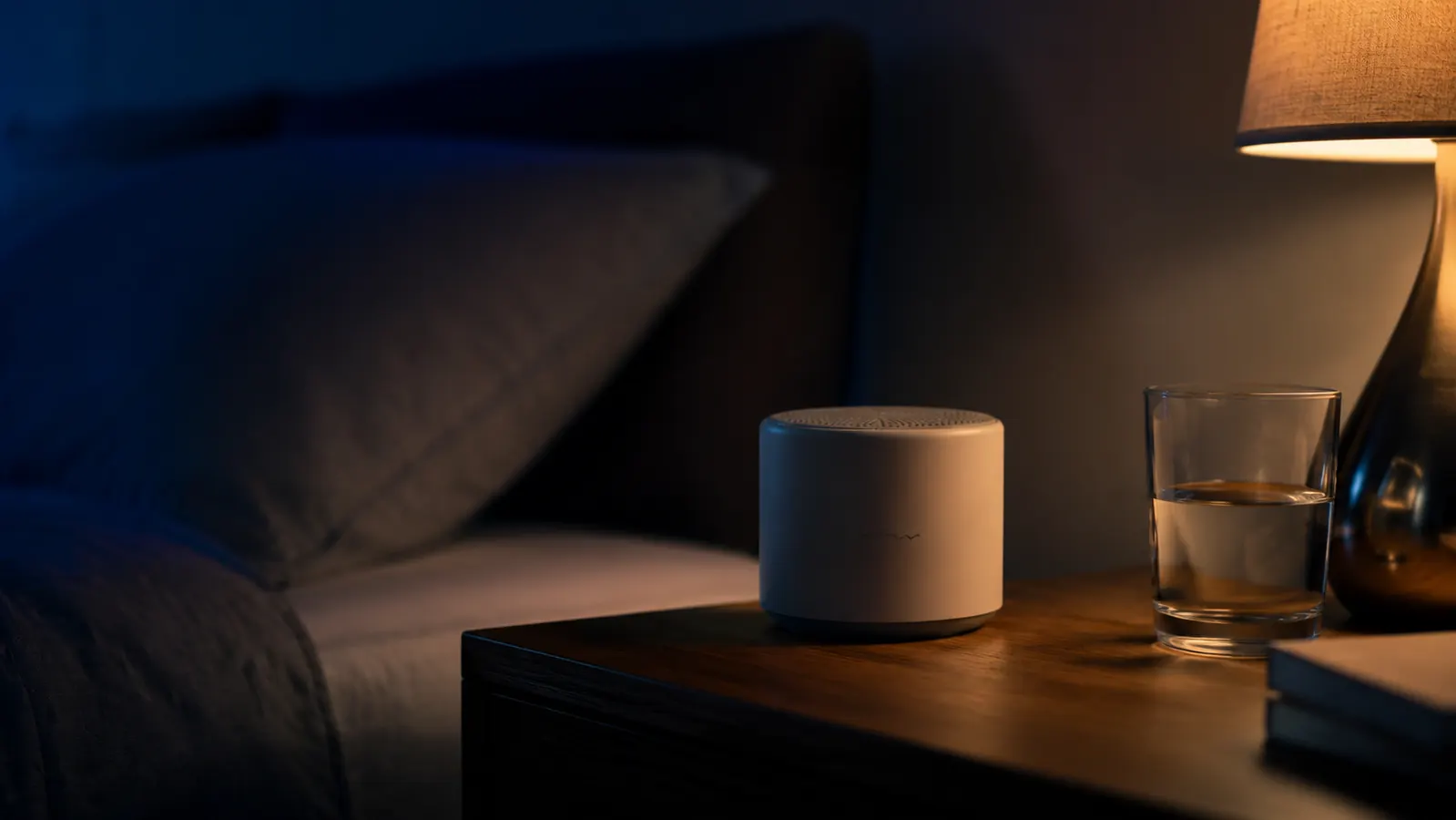
I bought my first white noise machine when my daughter was three weeks old and I hadn't slept more than four hours straight in a month. I figured it was for her. Turns out it was also, quietly, for me. Fifteen years later I still sleep with one. Not the same machine, obviously, but the same principle: a steady, unobtrusive layer of sound that keeps the rest of the night from interrupting me. The Yogasleep Dohm Classic is the one I've used longest and the one I recommend most often, but regardless of which machine you pick, here are ten legitimate reasons adults should stop treating white noise as something only babies need.
These are not ten variations of "it blocks noise." Each reason works through a distinct mechanism. Some are neurological, some are behavioral, some are just practical. If even three of them apply to your specific sleep problem, a white noise machine is probably worth trying before you do anything more drastic.
Your neighbors aren't going quiet. The Dohm is the next best thing.
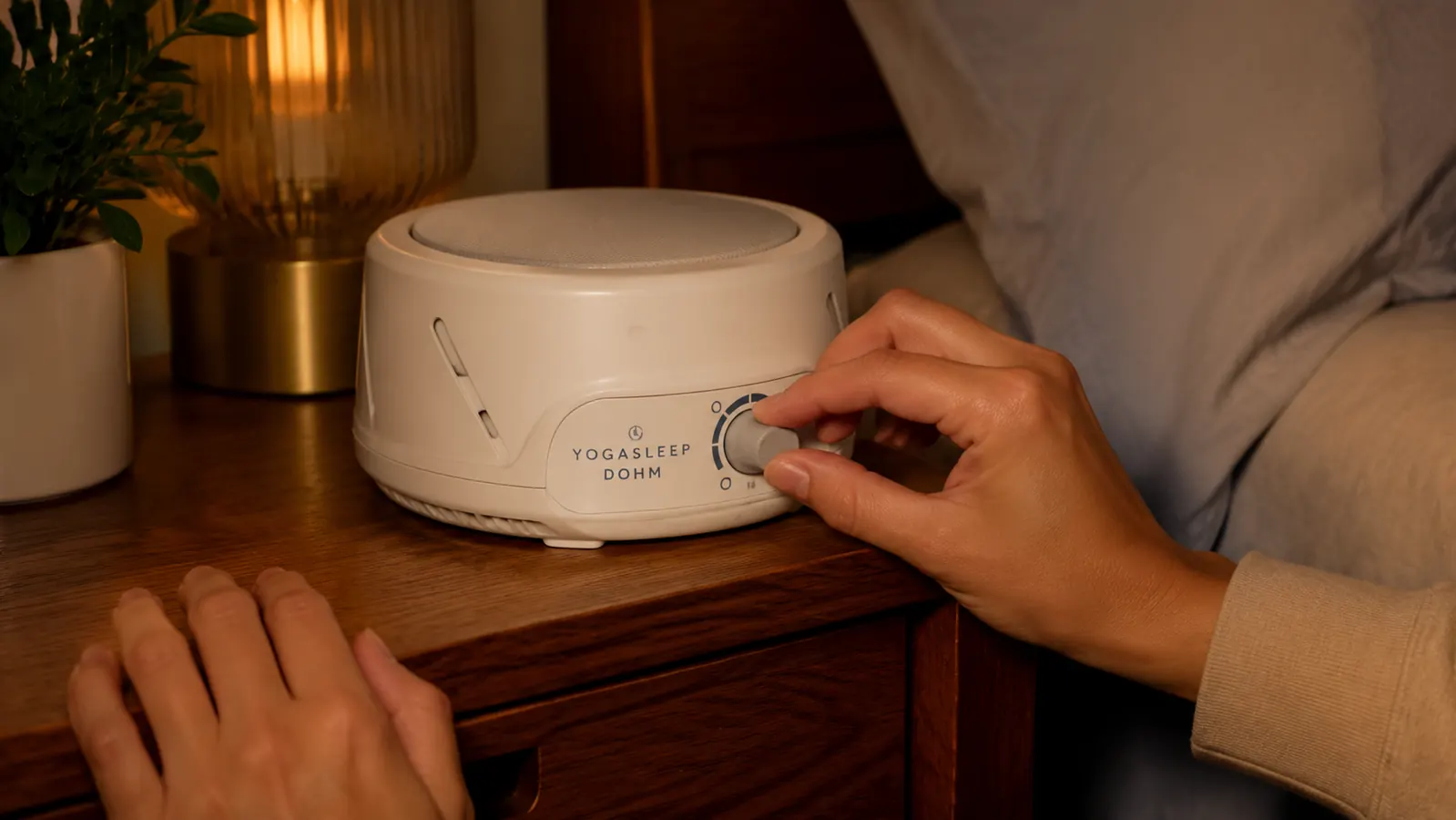
The Yogasleep Dohm Classic uses a real mechanical fan instead of looped digital recordings. That means no repeating pattern your brain learns to tune out, and no sudden silence if a file glitches. 4.6 stars across more than 40,000 adult reviewers.
Amazon Check Today's Price on Amazon →It Masks Acoustic Spikes, Not Just Ambient Volume
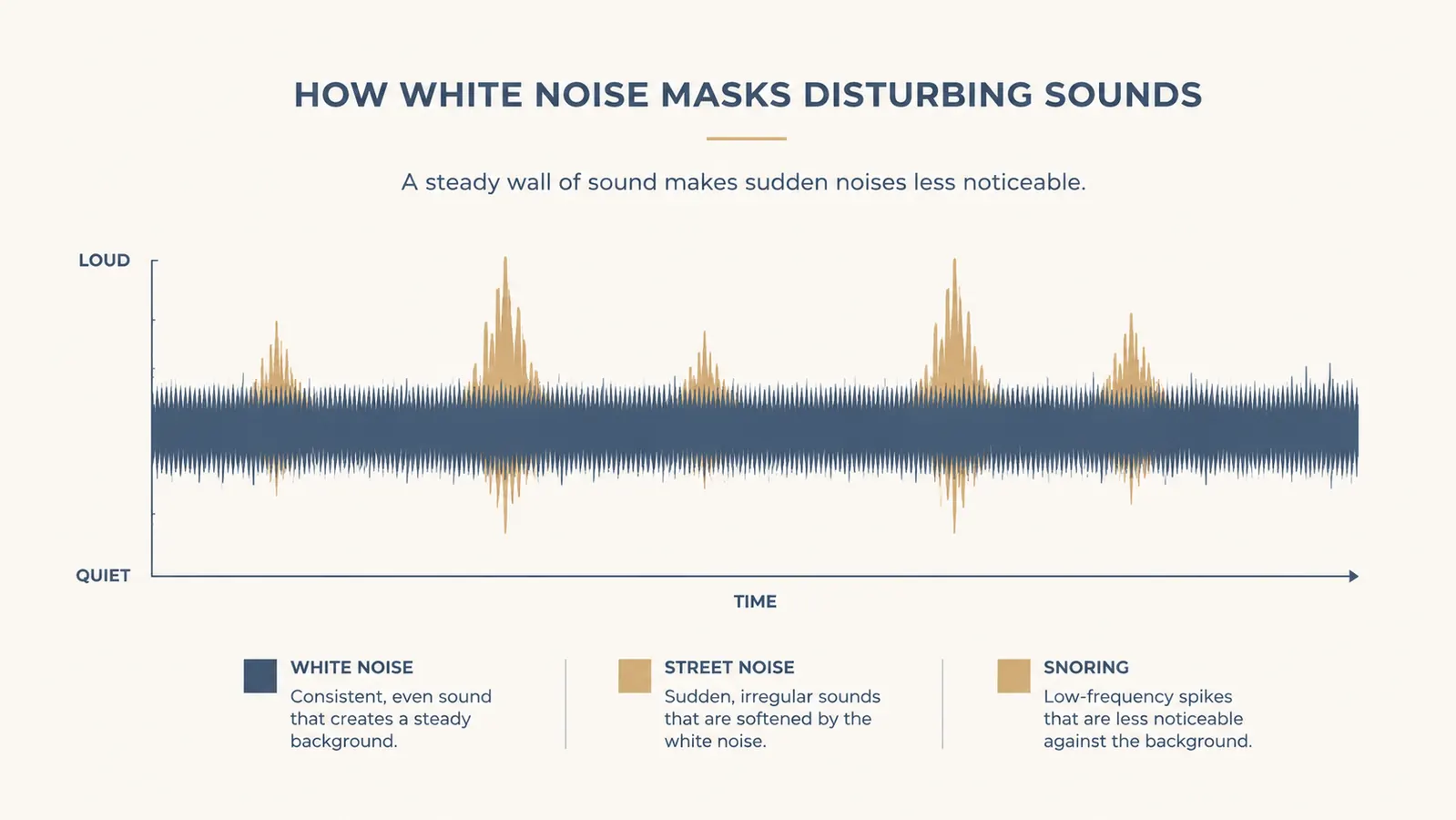
What actually wakes you up is not the average noise level in your room. It is the sudden contrast between quiet and a loud sound. A car horn at 2am does not wake you because it is particularly loud. It wakes you because the room was silent a half second before. White noise raises the ambient floor so that when a spike happens, the contrast ratio drops. Your auditory cortex registers a smaller jump and is less likely to treat it as a threat worth surfacing you from sleep. This is why white noise works even at volumes well below the disruptive sounds you are trying to mask.
It Gives Your Brain Something Neutral to Anchor To
A common complaint among adults with insomnia is that the silence of a bedroom is itself the problem. In quiet rooms, the brain has no external input to track, so it turns inward and starts generating content: tomorrow's meeting, the conversation you replayed four times, the thing you forgot to do. A steady, non-meaningful sound gives the auditory system something to do without stimulating the cortex the way speech or music would. It is neutral enough to recede but present enough to redirect.
It Helps You Fall Back Asleep After a 3am Wake-Up
Most adults with poor sleep are not struggling to fall asleep initially. They are struggling to fall back asleep after the inevitable 3am wake. At that hour, the world gets quiet in ways it isn't at 10pm, making every tiny sound more jarring. White noise running through the night means the acoustic environment is consistent whether you wake at 3am or 4am. You are not suddenly in a different, quieter room than the one you fell asleep in. That consistency lowers the barrier to re-entry into sleep.
It Can Reduce the Perceived Loudness of a Snoring Partner
I want to be honest here: white noise does not make snoring inaudible. If your partner snores loudly, you will still hear it. What changes is how intrusive it feels. Snoring is particularly disruptive because it is irregular and therefore unpredictable. Your brain cannot tune it out because it keeps changing. White noise does not eliminate the snoring but it fills the gaps between snore events, which makes the pattern less jarring and easier for your auditory system to deprioritize. It is the difference between something that demands attention and something that is just there. I wrote more about this in the Dohm and snoring piece if you want the full account.
It Creates a Sleep-Onset Cue Through Repetition
Sleep hygiene research consistently shows that conditioning your environment matters. When you use a white noise machine every night at the same time, you are building a cue-response loop. After a few weeks, the sound itself starts to signal to your nervous system that sleep is the expected next event. This is the same principle behind using a specific pillow spray or a consistent bedtime routine. The machine becomes part of the ritual, which is genuinely useful for people whose sleep problems are partly anxiety-driven.
It Handles the Sounds You Cannot Control
Blackout curtains handle light. A good mattress handles pressure. But sound from outside your bedroom is harder to address at the source. Street traffic, upstairs neighbors, early-morning garbage trucks, the HVAC system that decides to cycle at 4am: none of these are problems you can solve by negotiating. A white noise machine is the pragmatic answer to a category of sleep disruptors you simply cannot eliminate. It moves the problem from the source to the receiver, and that is often the only lever you have.
Mechanical White Noise Does Not Loop, Which Matters More Than You Think
Most phone apps and cheaper machines use recorded audio that loops every few minutes. After a few nights, your brain starts to pattern-match the loop, which means it partially processes the sound rather than ignoring it. A fan-based machine like the Yogasleep Dohm generates sound mechanically, so there is no loop and no repeating signature. The sound is genuinely continuous and non-repeating. This is a meaningful difference for anyone who has ever woken up right as a loop restarted and wondered why.
It Gives You Privacy in Shared Spaces
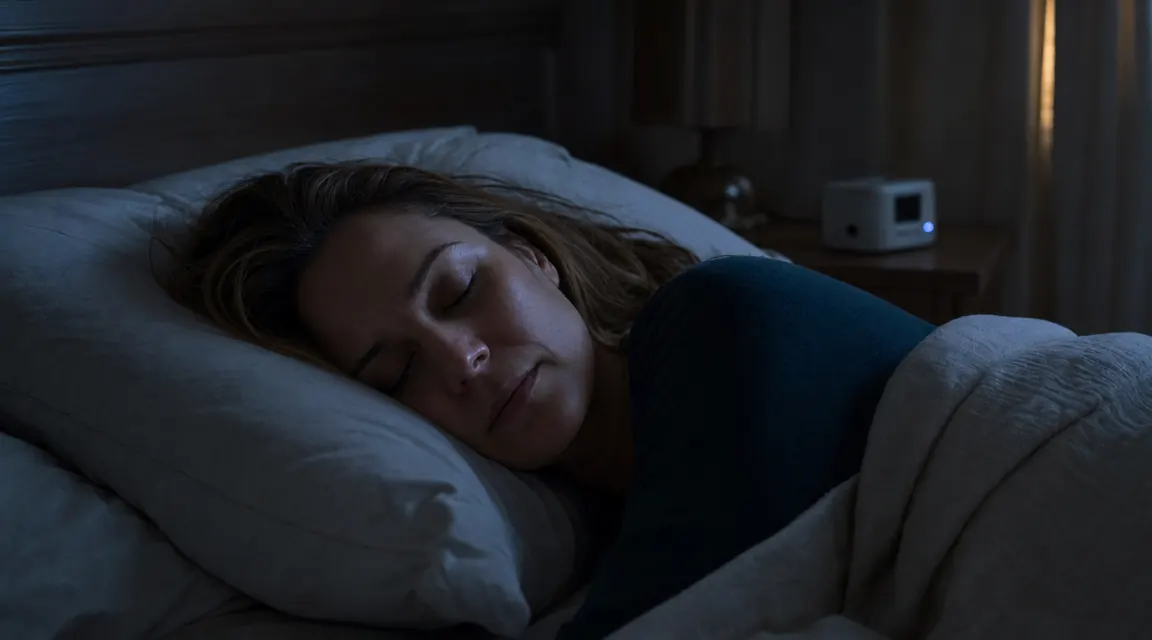
This one is underrated. If you live with roommates, a partner who keeps different hours, or teenagers who think midnight is a reasonable time to get a snack, a white noise machine in your bedroom creates acoustic insulation in both directions. You are less likely to hear them; they are less likely to feel like they have to tiptoe. It is not a social solution, but it removes one of the actual friction points in shared housing situations where you cannot ask everyone to be perfectly silent while you sleep.
It Is One of the Lowest-Risk Sleep Interventions Available
Prescription sleep aids carry dependency risks and morning grogginess. Even OTC options like melatonin have dosing questions and variable results. White noise machines carry essentially no physiological risk. There is no tolerance buildup, no withdrawal if you travel without one, and no morning fog. The main con is habituation: some people find they sleep less well in silent rooms after months of using one. That is worth knowing, but it is a mild tradeoff compared to the alternatives most people try first.
It Costs Less Than One Bad Night
If poor sleep is affecting your work, your mood, or your relationships, the cost-per-benefit math on a white noise machine is almost unfairly favorable. The Yogasleep Dohm has been around since 1962. It has no app, no subscription, no firmware update that quietly makes it worse. It is a fan in a cylinder with a tone adjustment ring. At current pricing it is less than a single session with a sleep specialist, and it arrives in two days. I am not saying it replaces medical care for serious sleep disorders. I am saying it is a reasonable, low-cost first move that a significant number of adults never try because they assume it is for infants.
What I'd Skip
Phone apps with white noise. I know they are free and already in your pocket, but the screen is a problem, the loop is a problem, and your phone doing other things at night is a problem. If you are serious about sleep, a dedicated device that sits on the nightstand and does one thing is meaningfully better than an app on a device that also receives notifications. I say this as someone who tried the app route for two years before finally buying a proper machine.
The machine becomes part of the ritual. After a few weeks, turning it on starts to signal to your nervous system that sleep is the expected next event. That conditioning is worth more than any single feature.
If you've been treating poor sleep as something to push through, the Dohm is a cheaper starting point than you think.
The Yogasleep Dohm Classic is the machine I've used the longest and recommended the most. Real fan, no loop, analog tone dial, built to last. If you want more detail before buying, read the full 60-night review first.
Amazon Check Today's Price on Amazon →