

I spent most of my thirties lying awake long after my husband had fallen asleep, running through tomorrow's calendar while my body refused to settle. I tried melatonin, sleepy teas, white noise, a sunrise alarm, and at least four different pillow combinations. Some things helped at the margins. Nothing solved the core problem, which was that my nervous system simply would not stop firing at night.
A weighted blanket was not on my list because I assumed it was a gimmick marketed at anxious millennials. Then a sleep researcher I interviewed for a piece described deep pressure stimulation in terms that actually made physiological sense: the gentle, distributed weight on your body triggers the same parasympathetic response that makes being held feel calming. It mimics the sensation of swaddling, which works on infants for a reason. I ordered one that week. What I did not know was that there is a right and a wrong way to use one, and that I would spend three nights doing it wrong before I figured out the difference. This guide is the version I wish I had found first.
If you're already shopping, this is the one I recommend at this price point
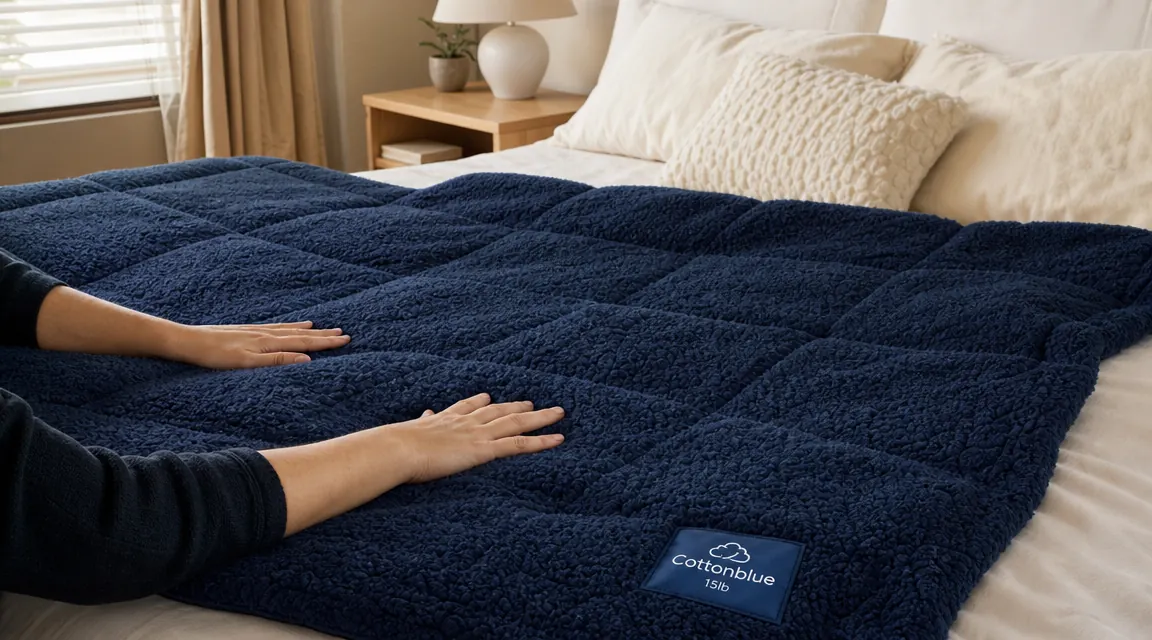
The Cottonblue 15lb weighted blanket is the specific one I use. Plush sherpa on one side, 15 pounds of evenly distributed glass bead filling, and it washes without the beads shifting into clumps. Check the current price before you read further, since it moves around.
Amazon Check Today's Price on Amazon →Why Most People Get Weighted Blankets Wrong From the Start
The blanket arrives, you unfold it on the bed, you get under it, and you wait for sleep to happen. When it doesn't happen immediately, you decide the blanket doesn't work for you. I have heard this story from at least a dozen readers, and every time I dig deeper, the problem is always one of three things: wrong weight, wrong warmth management, or no supporting routine. The blanket is a tool. Like any tool, it only works when you use it correctly.
Deep pressure stimulation takes time to accumulate. Most people give it thirty minutes before they're checking their phone under the covers. The physiological effect builds over the first twenty to thirty minutes of consistent contact. Interrupt that process and you reset it. Understanding this changes how you approach the whole thing.
Step 1: Choose the Right Weight for Your Body
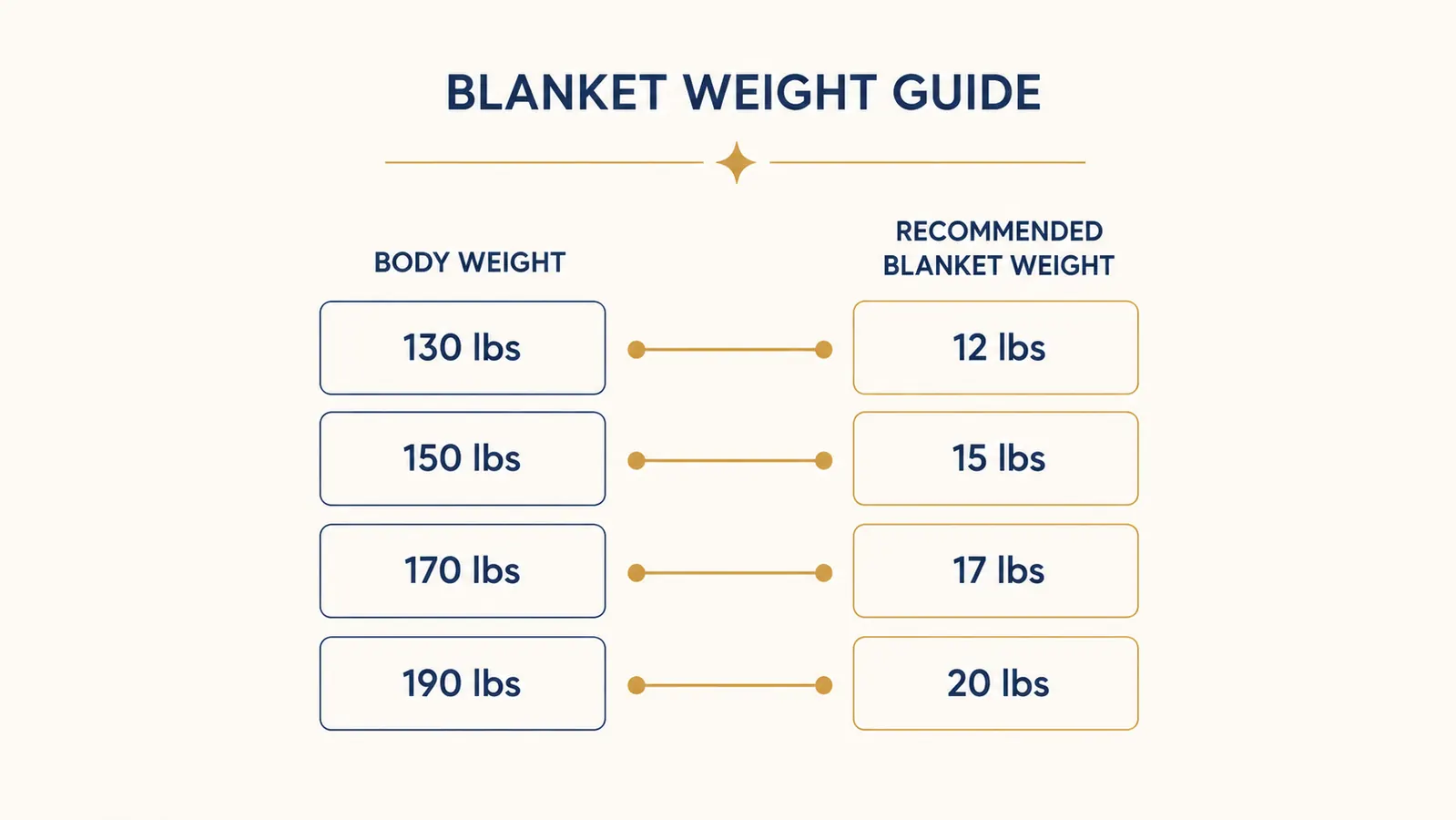
The standard guideline is ten percent of your body weight, and it exists for a reason. Too light and you get almost no deep pressure benefit. Too heavy and your body reads it as restriction rather than comfort, which spikes anxiety rather than reducing it. For most adults between 140 and 180 pounds, a 15-pound blanket is the sweet spot. If you are under 130 pounds, a 12-pound option is more appropriate. If you are over 200 pounds, consider going up to 20 pounds.
The Cottonblue comes in a 15-pound configuration, which is the right fit for a 150- to 165-pound adult. I am 157 pounds and it is exactly what I needed. I tried my sister-in-law's 20-pound blanket for one night and it felt like sleeping under a sandbag, not in a comforting way. Weight calibration matters more than any other single variable here.
One more thing on weight: do not split a weighted blanket with a partner. The ten-percent rule is per person. Sharing a 15-pound blanket between two adults dilutes the effect for both of you. If you both want the benefit, you both need a blanket.
Step 2: Manage Heat Before It Becomes a Problem
Weighted blankets are denser than a standard comforter, and density traps heat. If you are already a warm sleeper, your default instinct will be to throw the blanket off at 2am, which defeats the entire purpose. The fix is to reduce your other bedding before adding the weighted blanket, not to pile everything together.
I stripped my bed down to a fitted sheet and the weighted blanket. No duvet underneath, no extra throw. The Cottonblue's sherpa side is plush but not as insulating as a thick duvet, so on its own it sits at roughly the same warmth level as a medium-weight comforter. In summer, I flip it so the smoother side faces up. In winter, sherpa side up adds noticeable warmth without making me overheat. Two surfaces, one blanket, no problem.
If you run genuinely hot, drop your room temperature by two degrees before bed. The deep pressure benefit works best when your body can relax fully, and overheating prevents that. Your nervous system cannot settle if it is busy thermoregulating.
Step 3: Position the Blanket for Full-Body Coverage
This sounds obvious until you see how most people actually use weighted blankets: bunched toward the middle, leaving their legs uncovered, or draped so loosely that their arms slip out from under it within twenty minutes. The weight needs to cover your body from the chest down to your feet, with consistent contact across your torso and legs. That is where the pressure receptors are. Leaving your lower body uncovered is like turning a heating pad on and aiming it at your elbow.
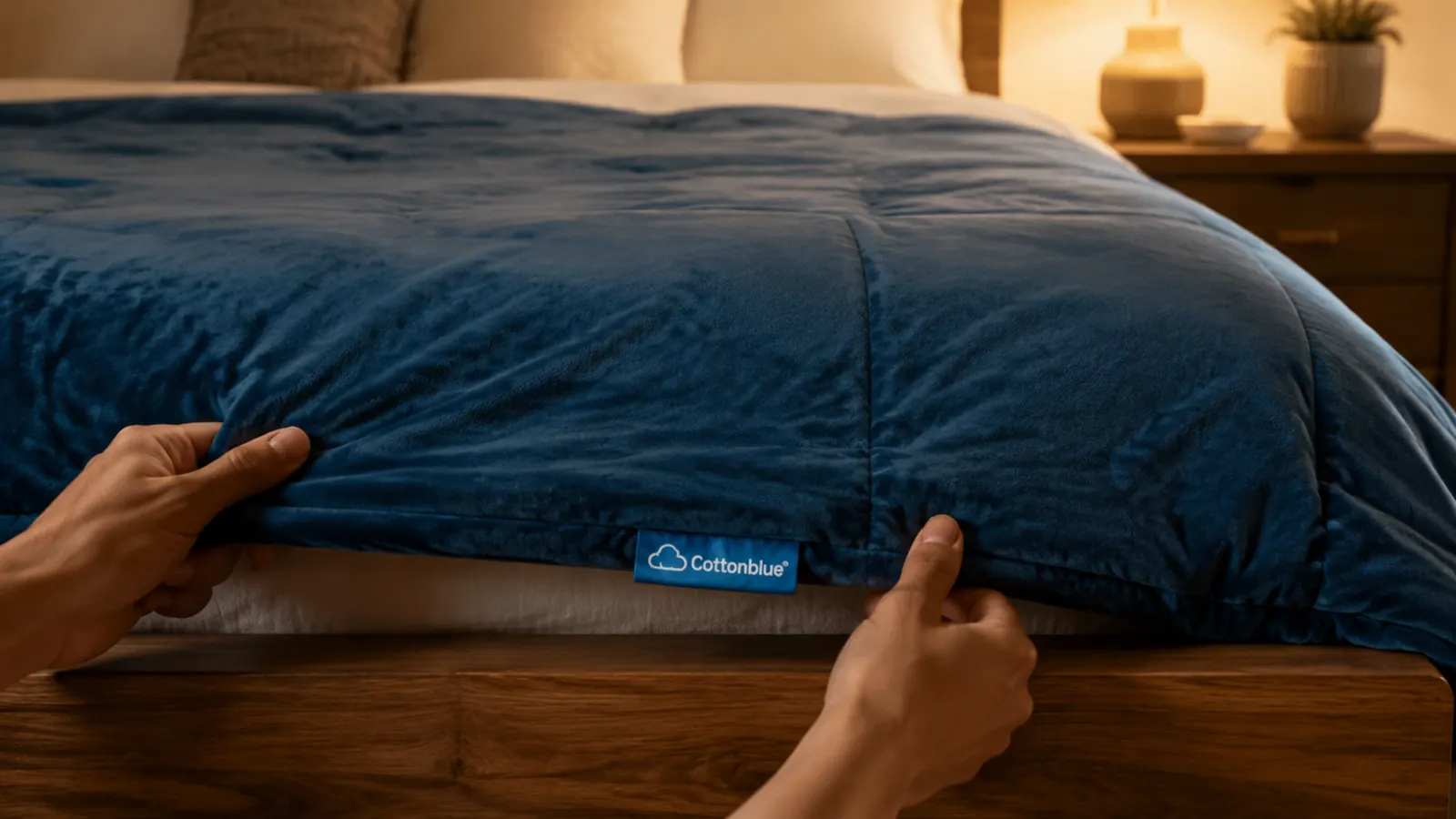
Tuck the foot end of the blanket slightly under the mattress if you can. This keeps it from sliding off when you shift positions. The Cottonblue is 48 by 72 inches, which is sized for a single adult and covers most body types fully when centered on the bed. If you are taller than six-two, be aware that it will sit shorter on your body than it would on an average-height adult.
Step 4: Build a 30-Minute Wind-Down Before You Get Under It
This is the step most guides skip, and it is probably the most important one. A weighted blanket dampens nervous system arousal. It does not override it. If you crawl under the blanket with your cortisol still elevated from a late email or a stressful hour of news, the blanket will feel pleasant but it will not knock you out. Your body needs a head start on deactivating before the deep pressure can carry it the rest of the way down.
My routine is simple and has not changed in about eighteen months. Screens off thirty minutes before I get into bed. Ten minutes of reading something with zero stakes, which for me is usually older fiction I have already read. Lights dimmed to the lowest setting. Then I get under the blanket and stay still. No scrolling, no replying to a text I remembered. Just under the blanket, in the dark. Within fifteen minutes my heart rate has dropped noticeably and I'm usually gone within twenty-five.
The combination of the wind-down and the blanket is what changed things for me. Either one alone helped a little. Together they produced results that were qualitatively different from anything else I had tried.
The blanket does not override a wired nervous system. It amplifies a calm one. Give your brain a thirty-minute head start before you get under it.

Step 5: Give It a Full Two-Week Adjustment Period
The first two or three nights under a weighted blanket often feel different in a way that is not entirely comfortable. The weight is unfamiliar. You may feel more aware of your body, not less. Some people report feeling slightly restless the first few nights. This is normal and it passes. Your nervous system is recalibrating to a new input. Push through it.
By night four or five, most people report that the blanket has stopped feeling foreign and started feeling like a genuine signal to their body that sleep is coming. By the end of two weeks, many people describe the blanket as something they actively miss when traveling without it. That shift, from unfamiliar to deeply associated with sleep, is the conditioning effect you are trying to build. It takes time. One trial night is not a fair test.
If after two full weeks you still feel no different, revisit the weight. That is almost always the issue. Either you are using a blanket too light for your body weight, or you are a warm sleeper and the heat disruption is canceling out the pressure benefit. Solve the heat problem first, then reassess.
What Else Helps
A weighted blanket works best as part of a sleep environment that is already doing most things right. Room temperature between 65 and 68 degrees Fahrenheit is the single most consistent finding in sleep research on thermal regulation. If your bedroom runs warm, address that before adding the blanket. Blackout curtains or a contoured sleep mask prevent the early-morning light intrusion that cuts sleep short even when you fall asleep fine. A white noise machine helps if your insomnia is noise-triggered rather than purely anxiety-driven.
None of these additions are required on night one. Introduce them one at a time so you can tell what is actually helping. Sleep changes can be hard to attribute when you change five variables at once. Start with the blanket, get two weeks of data, then layer in anything else that seems relevant to your specific pattern.
If you are curious how the Cottonblue compares to pricier options before you buy, the full long-term review covers ninety days of nightly use, including what held up and what I would change. The side-by-side comparison against the Gravity blanket is also worth reading if budget is a consideration, since there is a real case to be made either direction depending on your priorities.
If your nights still look like staring at the ceiling at 2am, start here
The Cottonblue 15lb weighted blanket is what I personally use and what I recommend to readers who want a reliable, well-constructed blanket without paying premium-brand prices. Rated 4.7 stars across nearly 6,000 reviews. Plush sherpa texture, even bead distribution, and it holds up in the wash.
Amazon Check Today's Price on Amazon →