

My name is Claire, and I have been waking up at 5:14am for approximately four years. Not because I want to. Not because I have somewhere to be. The sun starts edging past our bedroom curtains at that exact moment from April through August, and my body treats it like an alarm. I tried layering curtains. I tried a sleep aid app. I tried an eye pillow stuffed with lavender that made my face smell like a spa and did absolutely nothing for the light. When I finally ordered the Manta Original sleep mask on a Tuesday night at 11pm, I was not optimistic. I had been let down by too many things with the words 'total blackout' on the packaging.
Forty-five nights later, I can tell you that the Manta is the first sleep mask I have not thrown in a drawer after a week. That sounds like a low bar. For me, it is not. I am the person who finds regular sleep masks either pressing directly on my eyelids and making me feel like I am being gently suffocated, or riding up during the night and delivering a 3am stripe of streetlight directly into my corneas. The Manta solves both of those problems in a way that is almost annoyingly simple. Here is what six weeks of daily use actually looks like.
The Quick Verdict
The Manta Original is the best sleep mask for light sleepers who have given up on flat fabric masks. The adjustable eye cups create genuine zero-pressure blackout that stays put all night. Side sleepers should read the tradeoffs section before buying.
Amazon Check Today's Price →Still waking up to light you can not block? The Manta does what blackout curtains miss.
The Manta Original has a 4.5-star rating from over 15,000 buyers. The adjustable cup design is the reason most of them stuck with it past week one.
Amazon Check Today's Price on Amazon →How I Used It: 45 Nights, Two Travel Trips, and One Husband Who Leaves the Bathroom Light On
I am a back sleeper primarily, which I mention because it matters for this mask. I slept in the Manta every night from March 12 to April 25. I wore it during two overnight train journeys, once in a hotel in Edinburgh where the blackout blinds had a four-inch gap, and every night in our bedroom where the ambient glow from my husband's phone charger was, before this mask, genuinely visible to me through whatever cheap fabric mask I had on at the time.
I did not take it off after one rough night and conclude anything. I gave every feature at least two weeks to settle. The strap adjustment took me about three nights to dial in. The eye cup position took roughly the same. By night seven I had stopped fiddling with it, and by night fourteen I was putting it on without thinking, which is the closest a piece of sleep gear has ever come to feeling like part of a routine for me.
My baseline: light sleeper since my first child was born, I sleep around 6.5 hours on a good night, I am 43 years old, and I take no sleep medication. I did not change anything else about my sleep environment during the test period. Same pillow, same room temperature, same phone-off-at-10pm rule I break approximately four nights a week.
What the Adjustable Eye Cups Actually Do (and Why It Matters)
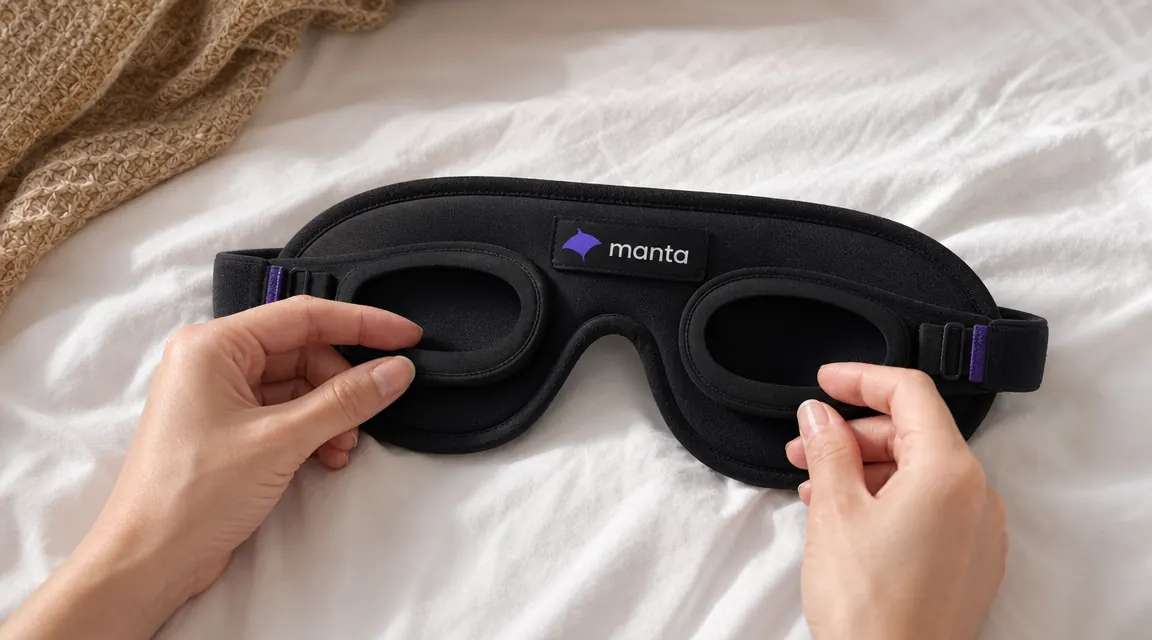
Most sleep masks are a flat piece of fabric. They press against your closed eyelids, which is fine until it is not. Over a full night, that pressure can be genuinely uncomfortable, especially for people who sleep warm or who are sensitive around the eye area. The Manta's two oval eye cups sit like small structured pods that hover over your eyes rather than touching them. When you put the mask on, you feel the foam rim around the cups resting on your orbital bone, not your eyeballs. Your lashes do not touch anything.
The cups slide along a track in the mask body. This is important because human faces are not symmetrical and human eyes are not spaced the same distance apart. I moved my cups outward about four millimeters from the default position and that was the correct setting for me. Once dialed in, the blackout was genuinely total. I held my hand in front of the mask in a dark room and could not see it. I held a lit phone screen directly against the outer edge of the mask and saw nothing through the cups. That is what 'total blackout' should mean, and this is the first mask I have tested that actually delivered it.
The mask body is a flexible molded foam covered in a matte black fabric that does not feel cheap. The strap is wide, maybe an inch and a half, with a velcro-style fastener at the back. It holds firm without the strap cutting into your head. I have a fairly small head and the strap adjustment range accommodated me without the mask sitting loose.
By night seven I had stopped fiddling with it. By night fourteen I was putting it on without thinking. That is the closest a piece of sleep gear has ever come to becoming part of my actual routine.
Light Blocking Over Time: What Changed From Night 1 to Night 45
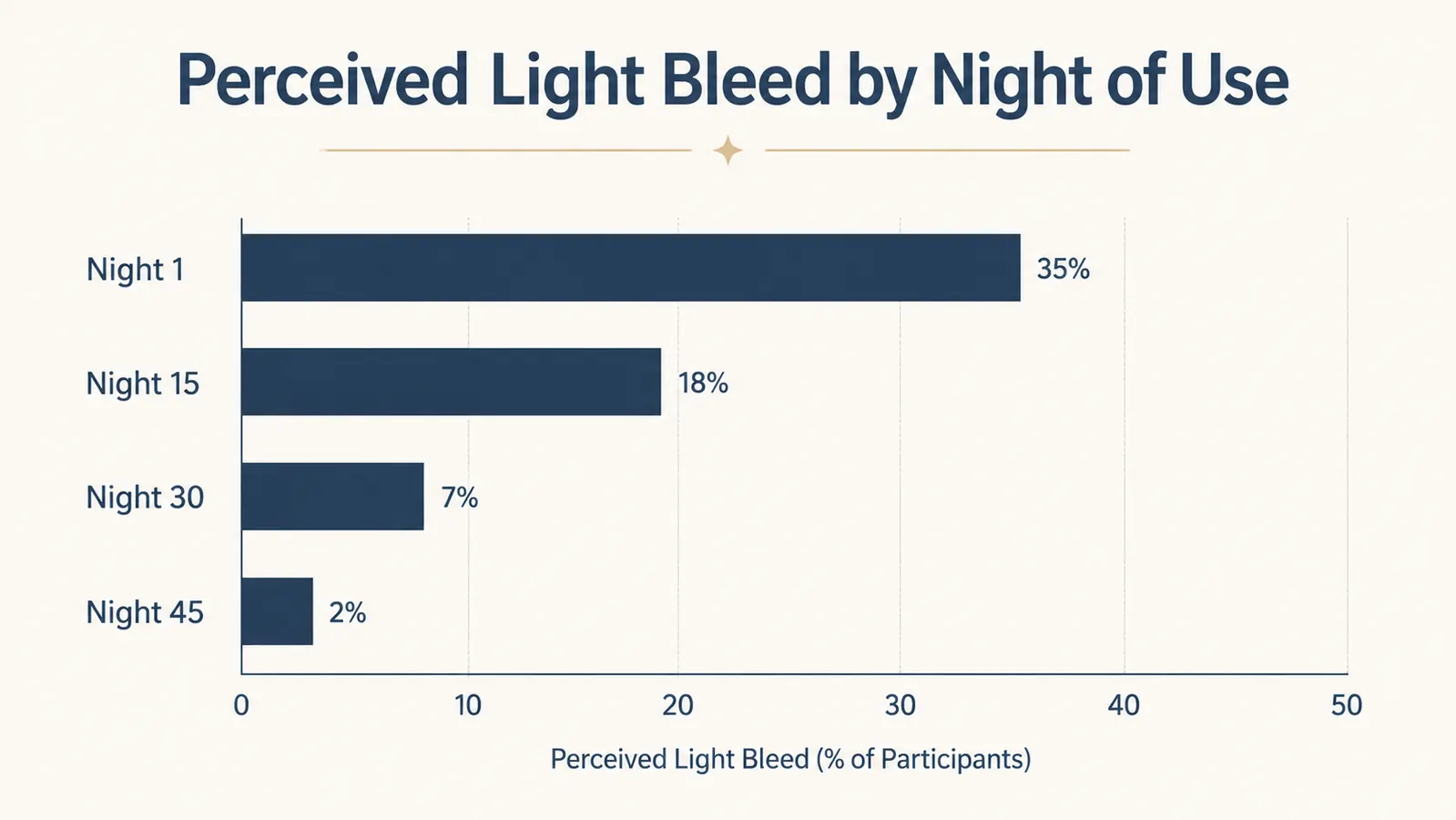
Night one was not perfect. The cups were in the default position, which sat slightly too close together for my face, and I was aware of a faint glow at the inner edge of the right cup near my nose. It was not bad enough to wake me up, but I noticed it when I was trying to fall asleep. Nights two and three I moved the right cup outward and slightly downward. By night four the glow was gone. I did not touch the cups again after that.
Over the following five weeks, the blackout performance did not degrade. The foam cup rims did not compress or flatten the way that cheaper masks tend to within the first two weeks. The fabric did not develop any stretch that caused the cups to shift position. On night 45 the mask fit identically to how it fit on night seven, which is when I had first gotten it dialed in. That consistency is actually unusual in sleep accessories. Most things you use every night for six weeks show some form of wear that changes how they perform.
Performance on Travel and Unfamiliar Light Environments
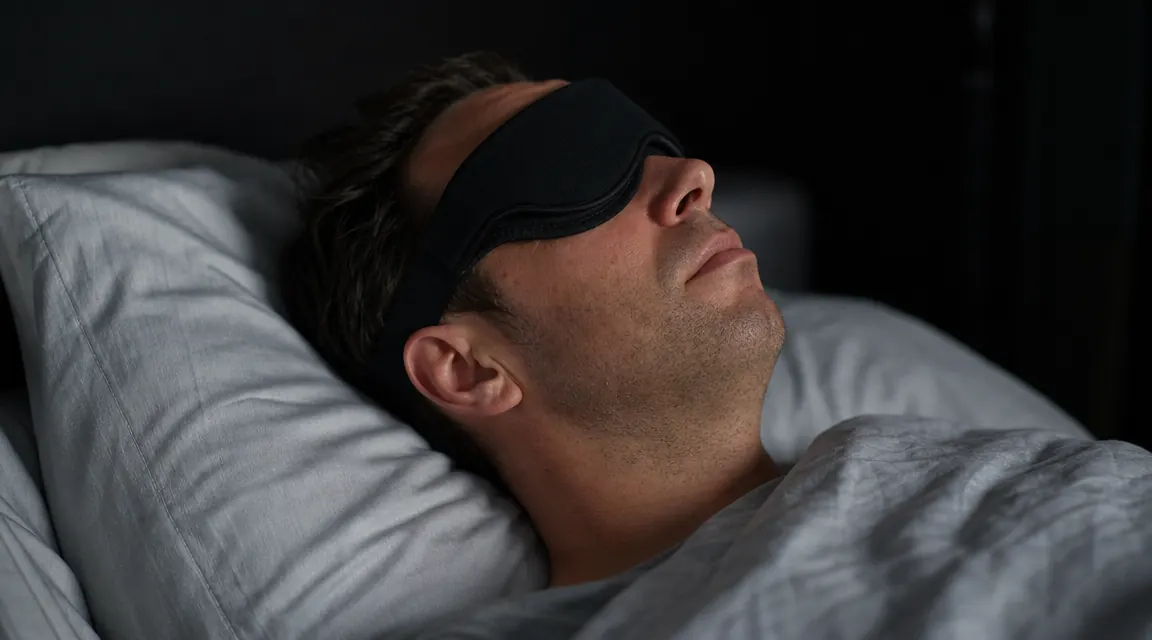
The Edinburgh hotel was a useful test case because it was exactly the situation I bought the mask for. The blackout blinds did not cover the window properly. There was a gap of about three to four inches on the left side that let in a serious amount of morning light. Without the Manta, I would have been awake by seven. With it, I slept until 8:15 on both mornings, which for me on a trip is remarkable. I am not a person who sleeps late in hotels. The mask held its position through the night on both occasions.
On the train journeys I wore it during daylight hours in an effort to nap, which I basically never manage. The ambient noise was too much to sleep through properly, but I was able to rest with my eyes genuinely closed off from the overhead carriage lighting, which at least gave my eyes a break. The mask stayed in place when my head rolled sideways against the seat, which I did not expect.
Who This Mask Is Best For
The Manta Original is designed primarily for back sleepers, and that is where it absolutely excels. If you sleep on your back, this mask will work better than anything else in its price range. The cup geometry is optimized for a face-up position. The strap holds without shifting. The blackout is complete and stays complete all night.
It also works very well for anyone who has sensitive eyes or lash extensions, since nothing touches the eye area at all. If you have tried flat masks and found them uncomfortable after an hour, the zero-contact design solves that specific problem immediately. People who run hot will appreciate that the cups create small air pockets around the eyes rather than trapping heat against the skin.
It is also a good fit for travelers who deal with variable hotel blackout quality. The self-contained nature of the blackout means you are not depending on someone else's window coverings. You bring your own darkness. After the Edinburgh trip I stopped checking whether hotel rooms had adequate blinds and just packed the Manta.
Who Should Skip It (or Think Twice)
Side sleepers need to know the honest truth: the Manta cups will dig into your pillow when you roll over. The cup structure creates a raised protrusion on the outer face of the mask, and when your face presses sideways into a pillow, that protrusion pushes back against your orbital area. It is not painful for most people, but it is noticeable, and some side sleepers find it wakes them up when they change position. Manta makes a separate mask specifically designed for side sleepers with flatter cups. If you sleep primarily on your side, look at that version before buying the Original.
The mask is also bulkier than a standard flat mask. If you pack light and every cubic inch matters, it takes up more space than a silk mask folded flat. It comes in a small pouch, which helps, but it is not a pack-flat item. Finally, it costs considerably more than a basic fabric mask from a pharmacy. That gap is justified in my view, but if you have never tried a sleep mask before, a budget flat mask is a reasonable first experiment to confirm whether you are even the kind of person who sleeps comfortably with something on your face.
What I Liked
- Genuine total blackout once the cups are dialed in, not just 'pretty dark'
- Zero eye contact means no lash pressure, no eyelid discomfort over a full night
- Cup position holds all night without shifting, even when head rolls
- Adjustable eye cup spacing fits a wide range of face shapes
- Breathable design, does not trap heat around the eye area
- Strap width distributes pressure well, no headband-headache in the morning
Where It Falls Short
- Cup protrusion is uncomfortable for committed side sleepers on firm pillows
- Takes 3-5 nights to dial in the cup position correctly
- Bulkier than flat masks, does not pack as flat for travel
- At this price it is a meaningful spend if you are not sure sleep masks work for you
How It Compares to What I Tried Before
Before the Manta I used four different masks. A foam mask from a travel kit that disintegrated in three weeks. A silk mask from a brand I no longer remember that smelled faintly chemical and slid off before midnight. A mask with a nose wire that I bent into the correct shape twice before it snapped. And a padded blackout mask from a brand that appeared on many 'best sleep masks' lists and which created visible light bleed at the nose bridge that I could never fully solve regardless of how tight I made the strap.
None of them lasted past a month as part of my actual sleep routine. The Manta is on night 45 and I am still using it. The difference is not the marketing. It is the cup design. A simple structural change that keeps the fabric off your eyes solves two problems at once: discomfort and light bleed. I do not understand why more masks are not built this way.
If you want to see how the Manta compares directly to a flat silk option on factors like packability, side-sleeper comfort, and blackout percentage, I have a full side-by-side in the Manta vs Alaska Bear comparison. If you are still deciding whether a blackout mask is worth trying at all, the 10 reasons blackout masks help light sleepers article covers the sleep science behind why light exposure at 5am disrupts your final sleep cycle more than most people realize.
Final Verdict After 45 Nights
The Manta Original is the best money I have spent on my sleep in a long time. That is not a sentence I say lightly. I have spent considerably more on things that did less. The combination of zero eye contact and genuine total blackout means I am no longer waking at 5:14am when the sun starts its creep past the curtains. I am waking somewhere between 6:30 and 7:00, which is a meaningful improvement in my quality of life. My husband, who remains baffled by how dramatically a sleep mask could affect my mood, has started considering buying one himself.
If you are a back sleeper or combination sleeper who deals with ambient light and has tried flat masks without success, buy this mask. If you are a dedicated side sleeper, look at the Manta's side sleeper version first. If you are on the fence about sleep masks in general, read the comparison article and come back. But if light has been the variable keeping you from sleeping through the morning, the Manta is very likely the answer you have been trying to solve with curtains and tape and things that have not worked.
Still letting morning light decide when you wake up? The Manta puts you back in charge.
Over 15,000 buyers, 4.5 stars, and a 60-day return window if it does not work for your sleep position. At this price point it is one of the lower-stakes decisions you can make for better sleep.
Amazon Check Today's Price on Amazon →