
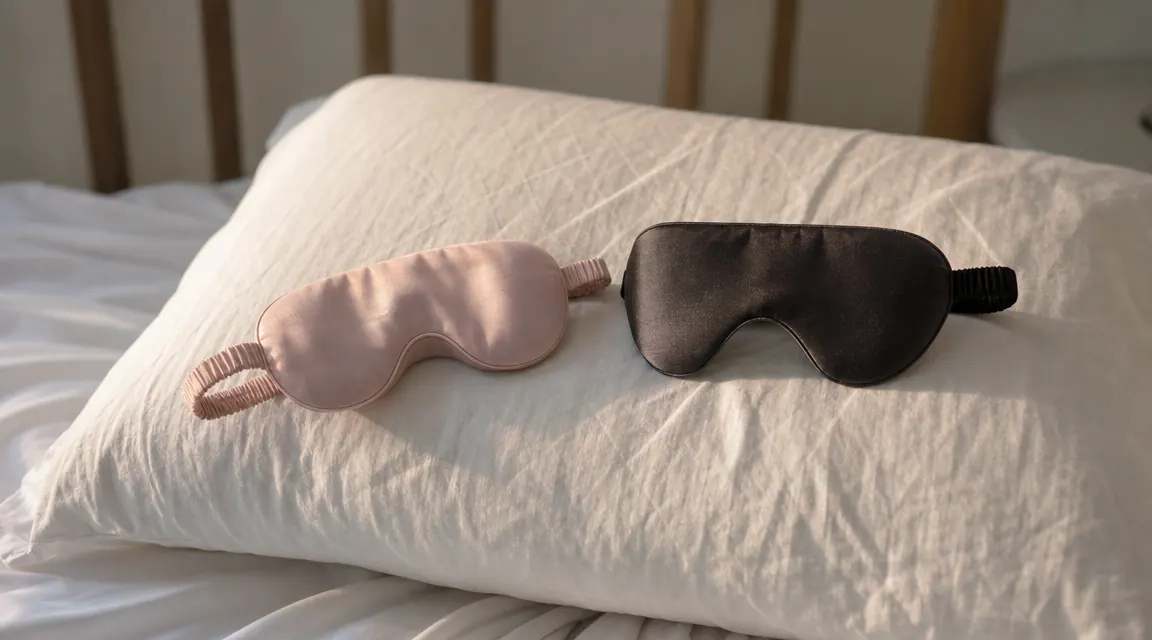
Here is the actual question: if your bedroom has a streetlight angled at your window, a partner who reads until midnight, or a smoke detector LED that somehow pulses exactly at eye level, which sleep mask solves it? The Alaska Bear silk mask looks beautiful in photos and costs about what you spend on a sandwich at the airport. The Manta Original costs four times more and looks like something a fighter pilot might reject for being too serious. I have slept in both. The answer is not as obvious as the price gap suggests, but it is not a coin flip either.
The short answer is this: if total blackout is the job, the Manta wins without much argument. If you want something whisper-soft that disappears on your face and you sleep in a reasonably dark room, the Alaska Bear is a legitimate choice at its price. This comparison exists because they are the two masks people reliably pit against each other, and the decision matters more than most people expect. A mask that lets in light at the nose bridge or presses on your eyelashes is not a sleep aid. It is an irritant you will throw across the room by week two.
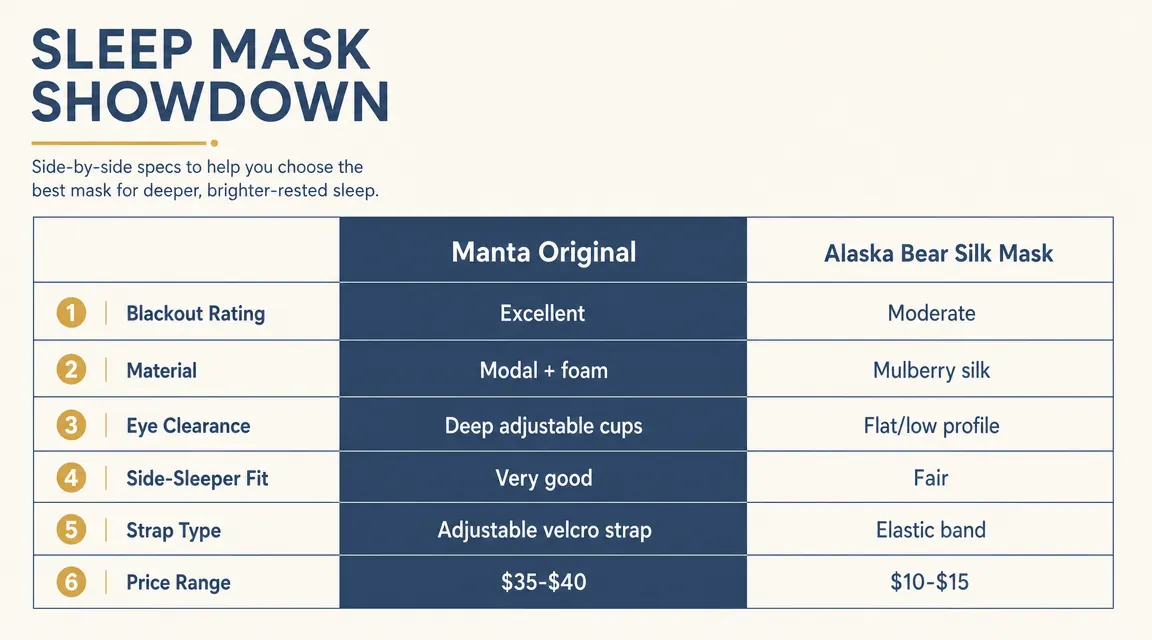
| Manta Sleep Mask | Alaska Bear Silk Mask | |
|---|---|---|
| Blackout effectiveness | Near-total: contoured cups and adjustable nose seal block light from all angles | Moderate: flat silk conforms to face but gaps form at nose bridge and cheekbones |
| Eye clearance | Deep cupped pods sit completely clear of lashes and corneas, zero contact | Flat fabric rests directly on closed eyelids, lash contact likely |
| Material against skin | Foam pods + soft adjustable strap; not silk but comfortable for most users | 19-momme mulberry silk on both sides, notably smooth and cool to the touch |
| Side-sleeper performance | Pods can shift or create pressure point against pillow; better for back sleepers | Flat profile lies flush against face and pillow, naturally comfortable on sides |
| Adjustability | Dual adjustments: eye cup position slides independently, elastic strap adjustable | Single elastic strap, no eye cup adjustment, one-size approach |
| Weight | Approximately 1.2 oz with cups, noticeably present on your face | Under 0.5 oz, essentially weightless |
| Price range | Check today's price on Amazon | Budget-friendly, widely available |
| Durability | Dense foam pods hold shape; strap elasticity holds well past 12 months with normal use | Silk weave can snag, pill, or distort after repeated washing; 6-month average lifespan reported |
If light is keeping you awake, a silk mask is not enough. Here is what is.
The Manta Original is the only mask I have tested that blocks light from every angle simultaneously, without pressing on your eyes. It earns 4.5 stars across 15,000+ reviews for a reason.
Amazon Check Today's Price on Amazon →Where the Manta Wins: Blackout Engineering That Silk Cannot Match
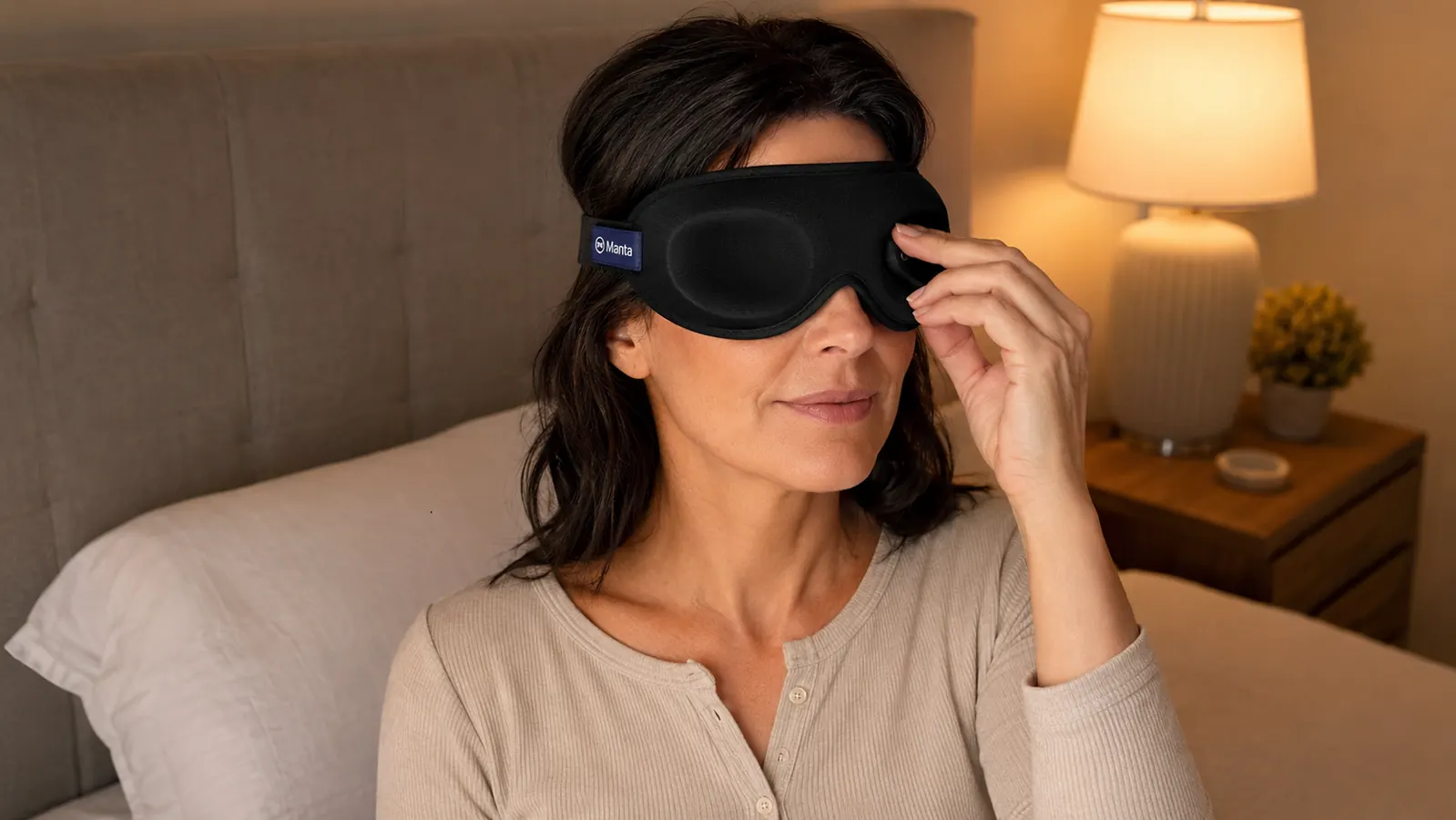
The fundamental design difference is this: the Alaska Bear is a flat rectangle of silk that wraps around your face and hopes for the best. The Manta is a system. The adjustable eye cups sit proud of your face in two independent pods, creating a sealed pocket of darkness around each eye without touching your eyelids at all. You can move each cup left, right, up, or down by about half an inch in any direction to match your specific orbital shape. That sounds like engineering overkill until 6am light starts pouring in and the Alaska Bear has a hairline gap at your nose bridge and you are awake before your alarm again.
The nose seal on the Manta is a flexible foam bridge that conforms to the contour where your nose meets your cheekbones, which is exactly where flat masks fail. Every flat mask, no matter how tightly you pull the strap, lets in a crescent of light at the sides of the nose. If your room is mostly dark, this is a nuisance. If you have a streetlight or a digital clock or a partner's reading lamp, that crescent is the thing that wakes you up. The Manta addresses this with structural geometry rather than relying on compression. That is the distinction that earns the price premium.
For people who do REM sleep tracking, or who notice their dreams are shallower in the later morning hours, light intrusion is the most likely culprit. The Manta's 4.5-star rating across more than 15,000 verified purchases is not driven by people who already slept fine. It is driven by people who had tried several masks before this one and found that, finally, a mask delivered what masks are supposed to deliver.
Where Alaska Bear Wins: Feel, Weight, and Sleeping on Your Side
Here is where I will give Alaska Bear its due, because it genuinely does some things better. The silk is real. Nineteen-momme mulberry silk is smooth enough that your skin does not register it as a presence. For people with sensitive skin, eyelash extensions, or a general aversion to foam against their face, this matters. The Alaska Bear disappears on your face in a way the Manta simply does not. You know you are wearing the Manta. You barely know you are wearing the Alaska Bear.
The Alaska Bear disappears on your face. The Manta makes light disappear from your room. Those are two different promises, and only one of them is what light sleepers actually need.
Side sleepers also get a real benefit from the flat profile. When you roll onto your side in a Manta, the cups press into the pillow and create a ridge that some people find distracting. The depth that makes it excellent for back sleeping becomes a liability when there is a pillow involved. Alaska Bear, being essentially flat, has no such problem. If you are a committed side sleeper who only needs to block moderate light, a quality silk mask in general, and the Alaska Bear in particular, is a reasonable solution. The one caveat is that you need to define what moderate means. If your room is dark with occasional flicker from outside, moderate is fine. If you face an east-facing window that goes from black to blazing in 20 minutes every morning, moderate light blockage is not going to get you there.
The Durability Question: What Happens After 6 Months
This is where the price comparison gets more nuanced. Alaska Bear masks at their typical price feel like a low-stakes purchase. But silk has a durability ceiling. After regular use and washing, the weave begins to distort, the elastic stretches past its useful range, and the mask that once felt luxurious starts to feel thin and rough at the edges. Most silk mask owners I have talked to replace them every 6-8 months. Some replace them more frequently. Over a two-year period, you might spend more on Alaska Bear masks than you would on the Manta's one-time cost.
The Manta's foam cups and nylon strap hold up considerably better over time. The strap retains elasticity well past the first year. The foam pods do not compress out of shape the way a flat foam mask does. If you wash it gently and store it properly, a Manta mask has a functional lifespan well beyond two years. For people who are spending on sleep quality as an ongoing commitment rather than a one-time experiment, the math favors the structured mask.
Who Should Buy the Manta
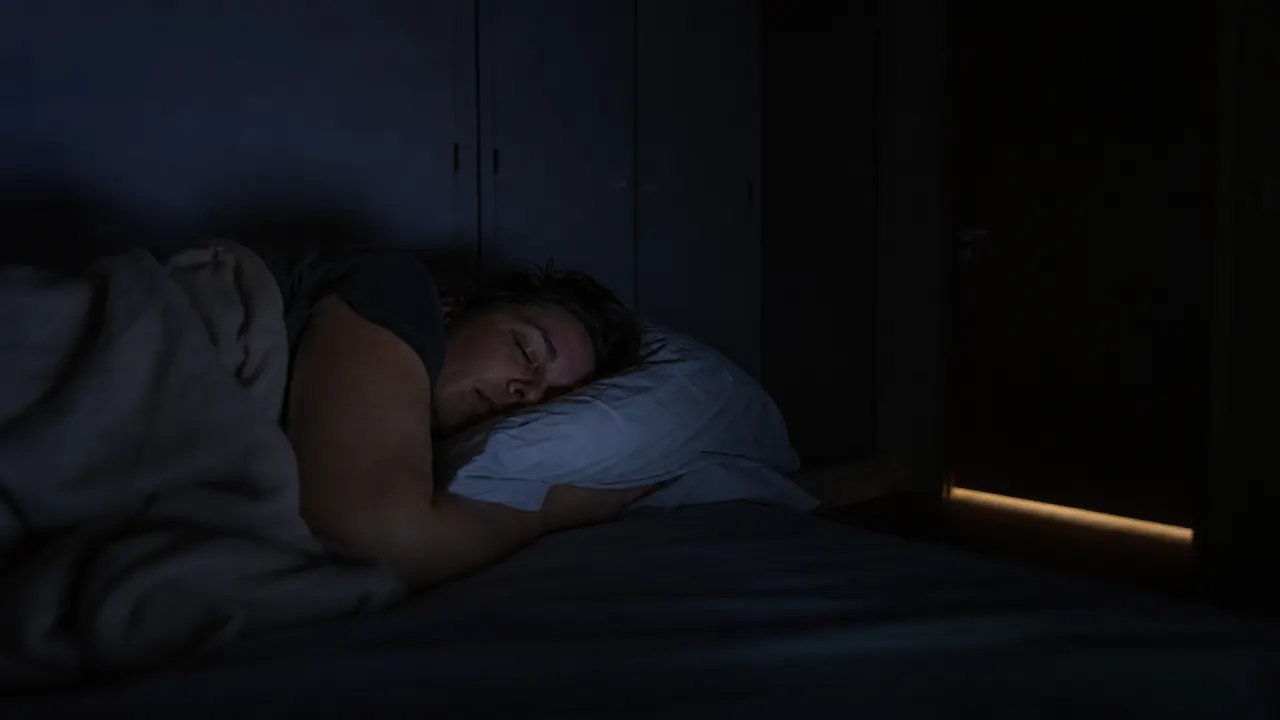
Buy the Manta if you are a light sleeper for whom any light intrusion is a genuine disruption. Buy it if you sleep on your back or a mix of back and side. Buy it if you have tried silk or foam flat masks before and found that they block some light but not enough. Buy it if you sleep in a room with a working smoke detector LED, a digital alarm clock, street lights, early sunrise through imperfect curtains, or a partner with any screen use at all after dark. Buy it if you are tired of replacing masks every few months. The Manta is built for people who take the darkness requirement seriously, and it delivers on that requirement better than anything else at its price point.
Who Should Buy the Alaska Bear (or Skip Both)
The Alaska Bear makes sense if your room is genuinely dark already and you want something that adds a small amount of additional shading while feeling as close to nothing as possible on your face. It also makes sense as a travel mask where you need something that folds flat in a carry-on and you are okay with imperfect blackout in hotel rooms. It is a sensible first sleep mask for someone who has never used one and wants to test whether darkness actually helps their sleep before committing more. But if you already know light is a problem, buying the cheaper option is usually how you end up buying the expensive one six weeks later anyway. I speak from experience.
Skip both if you have not first addressed your curtain situation. A mask solves light intrusion at the eye level, but a room flooded with light affects your body's melatonin signaling even through closed eyelids. For heavy light intrusion, blackout curtains plus the Manta is a dramatically better solution than either one alone. That said, the Manta is a meaningful upgrade over blackout curtains alone for the early-morning creep of light that gets under door frames and around window edges.
Done comparing. Ready for actual darkness.
The Manta Original has 4.5 stars from more than 15,000 buyers. It is the only mask in its price range with independently adjustable eye cups that clear your lashes completely. Check today's price and see if it ships to you.
Amazon Check Today's Price on Amazon →