
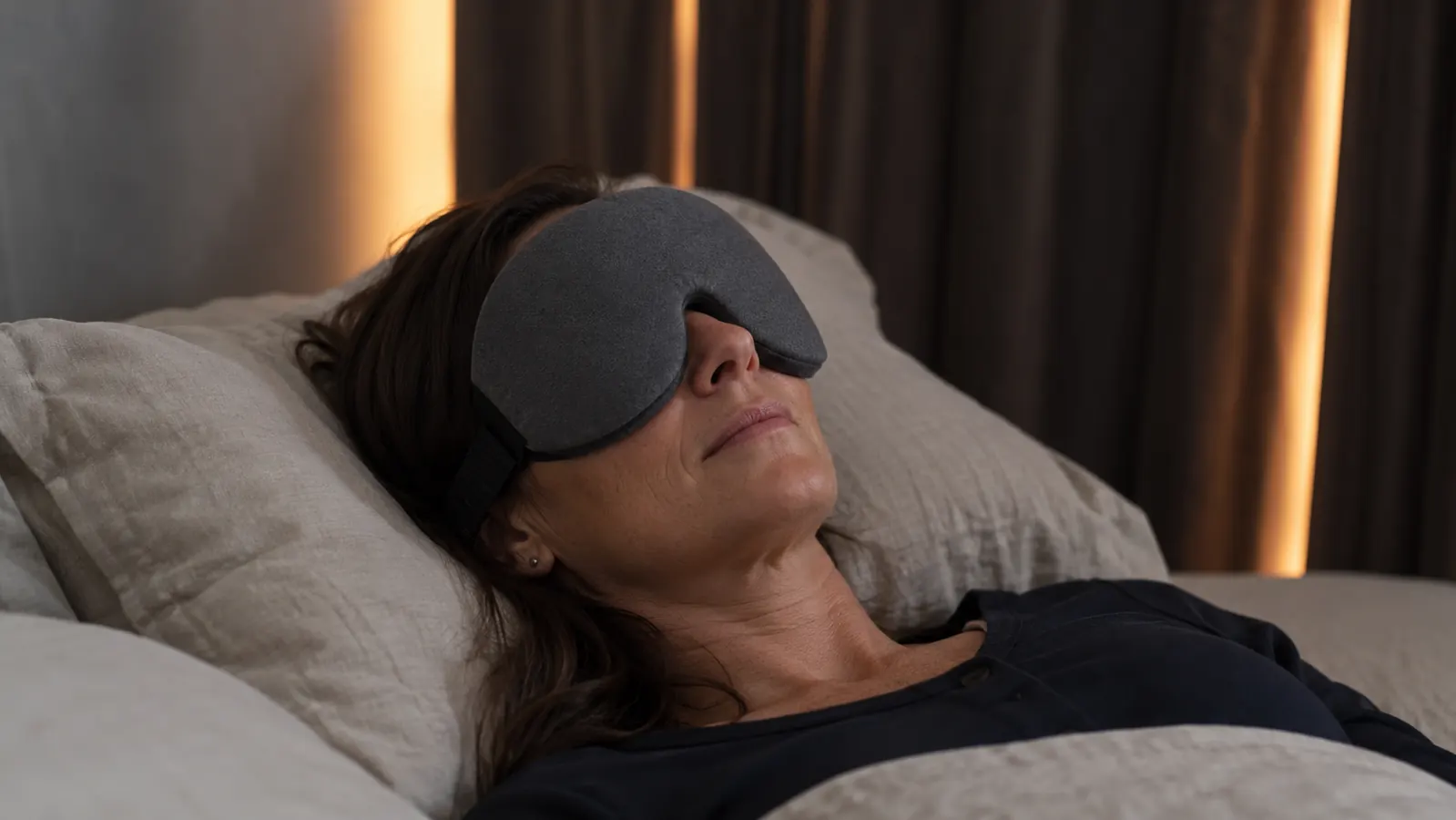
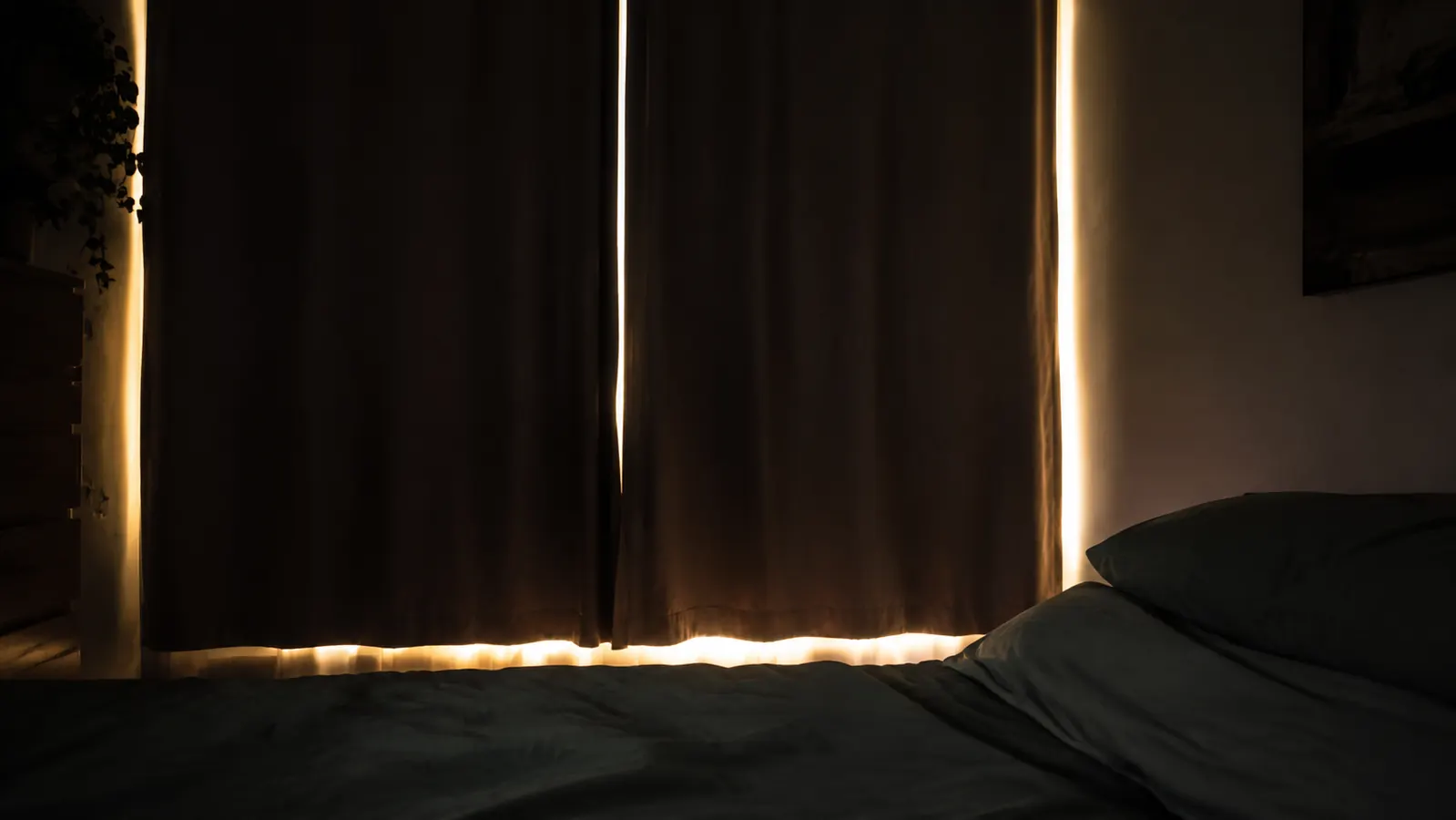
Here is the scenario I lived for about four years in my late thirties: I would fall asleep fine, sleep through the night decently, and then get dragged awake at 5:15am by a single thin strip of light coming through the gap between my blackout curtains. My phone screen across the room. The standby light on the TV. None of these were bright. All of them were enough.
A flat sleep mask felt like a solution until I actually wore one. The fabric pressed directly onto my eyelids, created a warm seal that made me sweat by midnight, and slipped off my face before my alarm went off anyway. I assumed sleep masks just didn't work for me. What I hadn't understood is that flat masks and contoured masks are solving almost different problems, and fitting even a good contoured mask incorrectly produces the same frustrating result. This guide walks through every step I wish someone had handed me.
Still waking up to early light? The Manta Original creates a genuine blackout chamber with zero lash contact.
The Manta Original uses independently adjustable eye cups that sit away from the lashes entirely, with a 360-degree adjustable strap. It takes about two minutes to fit correctly. Here is today's price on Amazon.
Amazon Check Today's Price on Amazon →Step 1: Understand Why Light Wakes You (Even When You Think You Are Asleep)
Before adjusting a single strap, it helps to understand the mechanism. The human eye detects light even through closed lids, and the retinal cells responsible for suppressing melatonin, the ipRGCs, are sensitive to levels far below what you consciously register as bright. A phone charging light across the room, the standby LED on a cable box, the streetlamp glow coming under a door: all of these register at the photoreceptor level and signal your brain to begin the waking process.
This is why some people report sleeping well with light in the room but still waking feeling unrested. The sleep depth metrics on their wearable tell the story: fewer minutes in slow-wave sleep, more light-sleep phases in the second half of the night. The light isn't waking you fully; it's pulling you up a level and keeping you there. Blocking it completely, not just dimming it, is what changes the outcome.
The Manta Original Sleep Mask is built around this principle. Its foam eye cups are structured as small chambers that sit proud of the eye socket, so there is a small pocket of darkness between the lens of the cup and your closed lid. No fabric pressure on the lashes. No seal that captures heat. Just dark, quiet space.
Step 2: Choose a Contoured Mask, Not a Flat One
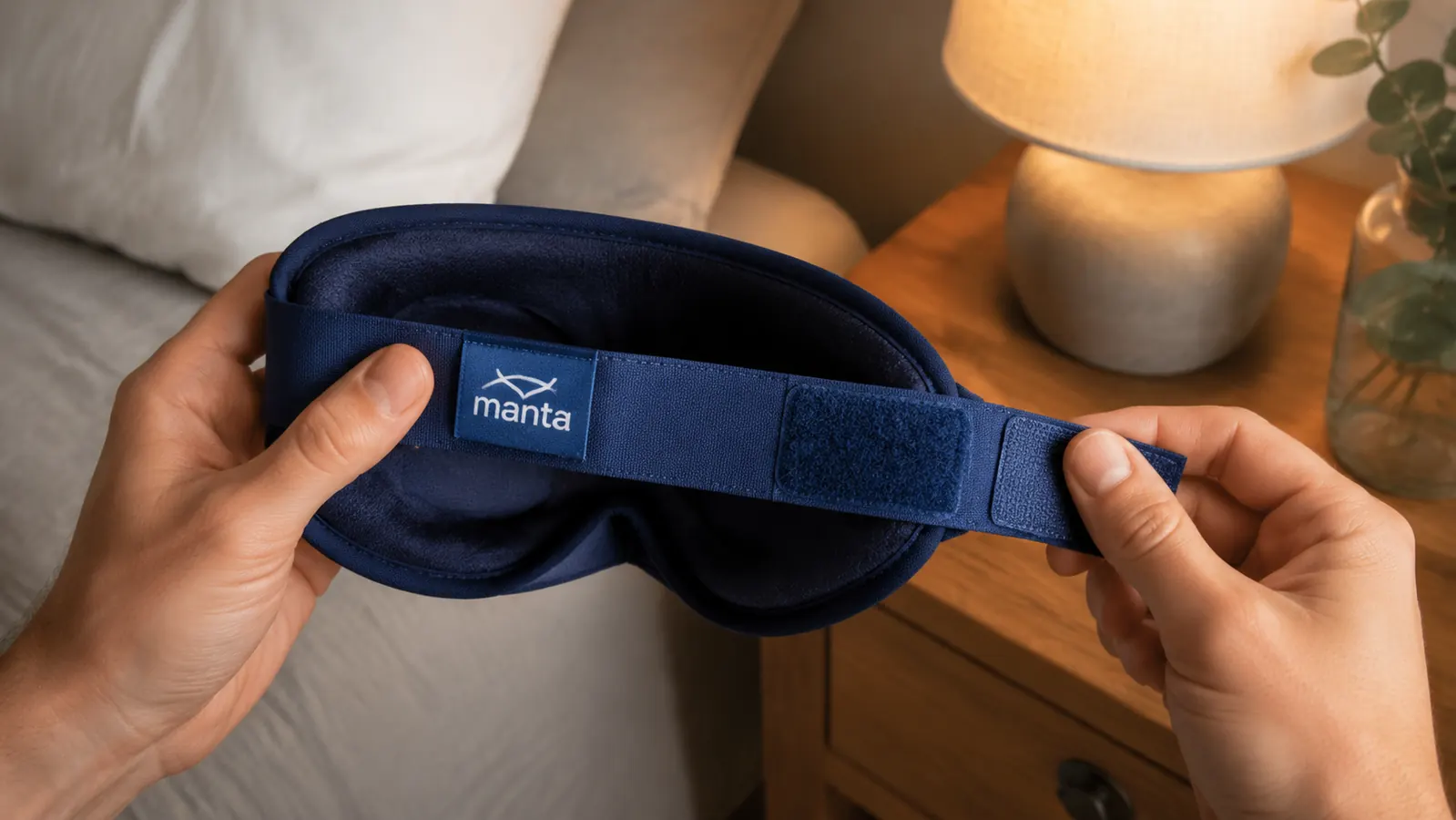
The core problem with most sleep masks sold in travel packs and drugstore displays is that they are flat fabric stretched across the face. They work reasonably well for people with deep-set eyes. For everyone else, which is most people, the center of the mask presses directly on the eyelid. This creates three problems: lash discomfort that wakes you in the night, a warm microclimate that promotes sweating, and eye-movement interference during REM that can actually disturb dream-phase sleep.
A contoured mask uses molded foam cups or shaped foam inserts to create a hollow space over each eye. The mask contacts your nose bridge, cheeks, and brow bone, but the eye cups hover. The Manta Original takes this further by making each cup independently adjustable: you slide them along a track to position them directly over your eye socket, regardless of face width or eye spacing. I have a narrow face and a wide eye spacing, which made every fixed-cup mask I tried either press on one eye or gap on the other. The sliding cups solved that in about ninety seconds.
The Manta fits differently from any mask I had tried before. I expected to feel it. What I noticed instead was that I stopped noticing it, which is exactly the point.
Step 3: Fit the Strap Before You Fit the Cups
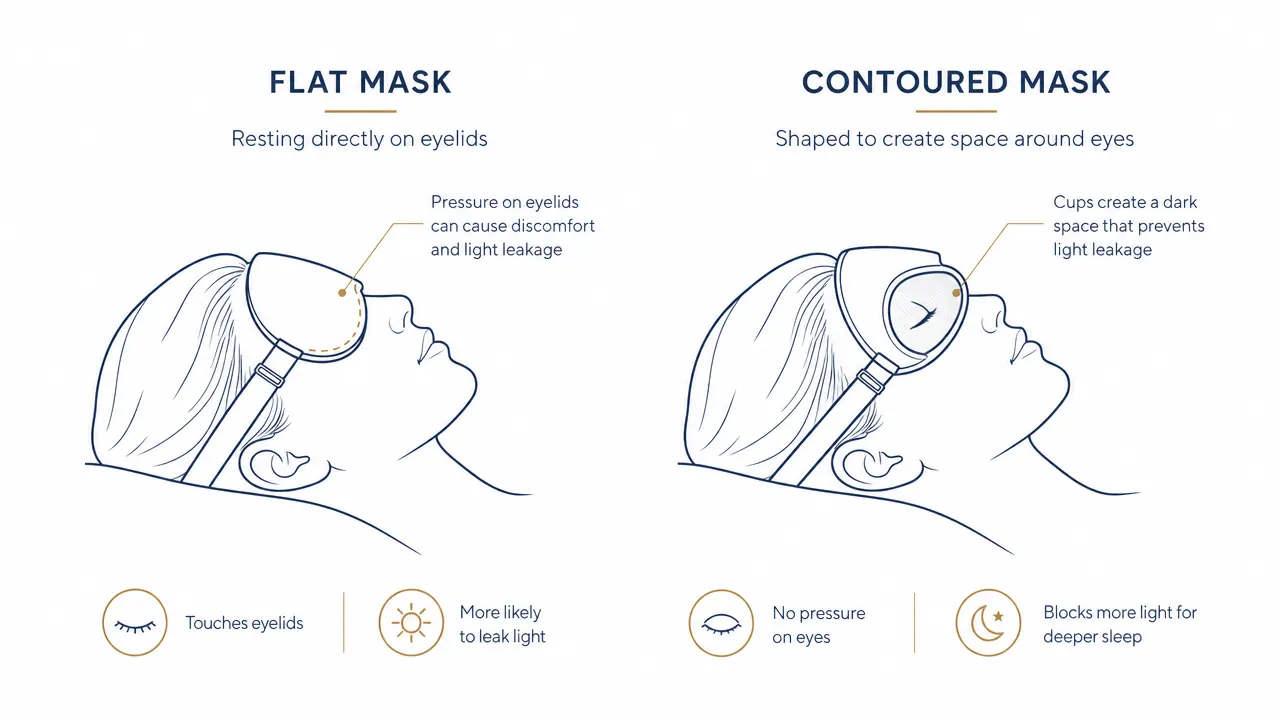
Most people do this backwards. They position the eye cups on their face first, then fumble with the strap around the back of their head. The correct sequence is to start with the strap. Put the strap around your head at the level that feels natural, roughly at the midpoint between your ears and the crown of your skull. Adjust the velcro so the strap is snug but not tight. You should be able to slide two fingers under it.
The reason to set the strap first is that strap tension controls how the mask seats on your face. If the strap is too tight, the mask gets pulled into the eye socket regardless of cup position. If it is too loose, the mask rides upward when you roll and light leaks in at the cheekbone. Once you have the strap tension right, then slide the cups so they sit centered over each eye. The foam edge of each cup should rest on the orbital bone, not on the eye itself.
For side sleepers specifically: go slightly looser on the strap than you think you need. When your head presses into the pillow, the strap compresses slightly, which effectively tightens the mask by about one notch. A mask that felt right flat on your back will feel too tight once you roll. Starting a hair looser corrects for this.
Step 4: Eliminate the Light Sources the Mask Cannot Reach
A sleep mask handles the problem from your face outward, but if you're in a room flooded with midday-level light, the mask is doing heavy work and any slight gap matters much more. The most effective approach is to reduce ambient light in the bedroom first, then use the mask to handle whatever is left.
Blackout curtains with a center overlap, not panels that leave a seam in the middle, will eliminate most window light. Tape a strip of black craft foam behind the curtain rod to block the top gap. Remove or cover LED indicator lights on chargers, routers, and cable boxes with a small piece of black electrical tape. These steps take twenty minutes once and make a meaningful difference in how hard your mask has to work.
The Manta Original's foam cups are dense enough to block residual light effectively even in a partially lit room. But in a room you have already darkened, the cups create a condition closer to underground than to dim: genuinely no light. That is the combination that shifts morning wake time. I moved mine from 5:15am to closer to 6:45am within about a week of doing both.
Step 5: Build the Mask Into Your Bedtime Routine, Not Just Your Bedtime
One mistake I made early on was treating the mask like a last step, something I reached for after I was already lying down with the lights off. The problem is that putting on a mask in the dark, adjusting cups you cannot see, and figuring out which direction the strap goes is frustrating and disruptive. The mask starts to feel like an obstacle.
Instead, fit the mask as part of your wind-down routine, while the bedside lamp is still on. Set the strap tension. Position the cups. Then set it aside on your nightstand. When you actually turn the light off and lie down, you pick up a mask that's already adjusted for your face and put it on in about four seconds. This sounds minor but it genuinely changes the experience. The mask transitions from a fiddly piece of gear into something you reach for automatically.
If you share a bed with a partner who reads or uses their phone after you, this routine also lets you put the mask on without asking them to turn off their light. You have bought yourself an independent sleep environment within the same bed, which is one of the more practical relationship improvements a budget product can provide.
What Else Helps
A sleep mask addresses light, which is one of the three main circadian disruptors in a typical bedroom. The other two are temperature and sound. For temperature, a cooling mattress topper or breathable pillow fill will prevent the early-morning heat buildup that pulls you into lighter sleep phases around 4am. For sound, a white noise machine running at the foot of the bed does a better job of masking intermittent noise than earplugs, which block everything and can feel claustrophobic.
For most light sleepers, addressing all three in combination produces a result that addressing any one alone cannot. The mask is typically the cheapest and fastest fix to implement, which makes it the natural first step. If you're still waking early after two weeks with the mask fitted correctly and the room darkened, the next variable to check is surface temperature.
The Manta Original is rated 4.5 stars across 15,231 reviews on Amazon, with the most consistent praise going to the no-lash-pressure design and the adjustable cup system. The most common criticism is that the mask sits slightly proud of the face for some stomach sleepers, so if you sleep face-down you may want to read the dedicated review comparing it against flatter alternatives before buying.
Ready to stop waking up to that 5am light strip? Here is the mask that fixed it for me.
The Manta Original Sleep Mask is the specific tool referenced throughout this guide. Adjustable cups, zero lash pressure, 360-degree adjustable strap. It works out of the box, but the five steps above will get you to full blackout conditions faster.
Amazon Check Today's Price on Amazon →