

I have spent a genuinely embarrassing amount of money on sleep masks. A silk one from Amazon that cost eight dollars and bunched up by 1am. A fabric one with a foam bridge that left a ridge across my forehead. A weighted one that turned out to weigh about as much as a damp napkin. For most of my thirties I was the person who would buy anything that promised to keep out the 5:47am sun that absolutely demolishes sleep in my east-facing bedroom. So when I say I came to the Manta Original sleep mask with low expectations and a high tolerance for disappointment, I mean it.
This is not the review where I tell you the Manta is perfect and you should buy it immediately. The other review on this site covers the long-term performance positives for back sleepers and light-sensitive people. This one covers the stuff that showed up in my first two weeks, the things that the five-star crowd tends to skip past. The strap. The side-sleeper cup problem. The price calculus. The learning curve that nobody warns you about. If you sleep on your back and barely move, you can probably stop reading and just go buy it. If you side sleep, stomach sleep, or share a bed with someone who would notice you adjusting a mask every forty minutes, keep going.
The Quick Verdict
Genuinely the best blackout performance I have tested, but the side-sleeper cup shift is real, the strap snags fine hair, and the price gap over a budget mask only pays off if you actually stay on your back.
Amazon Check Today's Price →If you're a back sleeper who needs true blackout darkness, the Manta earns its price.
It is the only mask I have tested that creates a complete light seal without pressing on my eyelids. Check current price on Amazon before deciding whether the gap over budget options is worth it for your sleep position.
Amazon Check Today's Price on Amazon →What the Manta Actually Gets Right (So We're Being Fair)
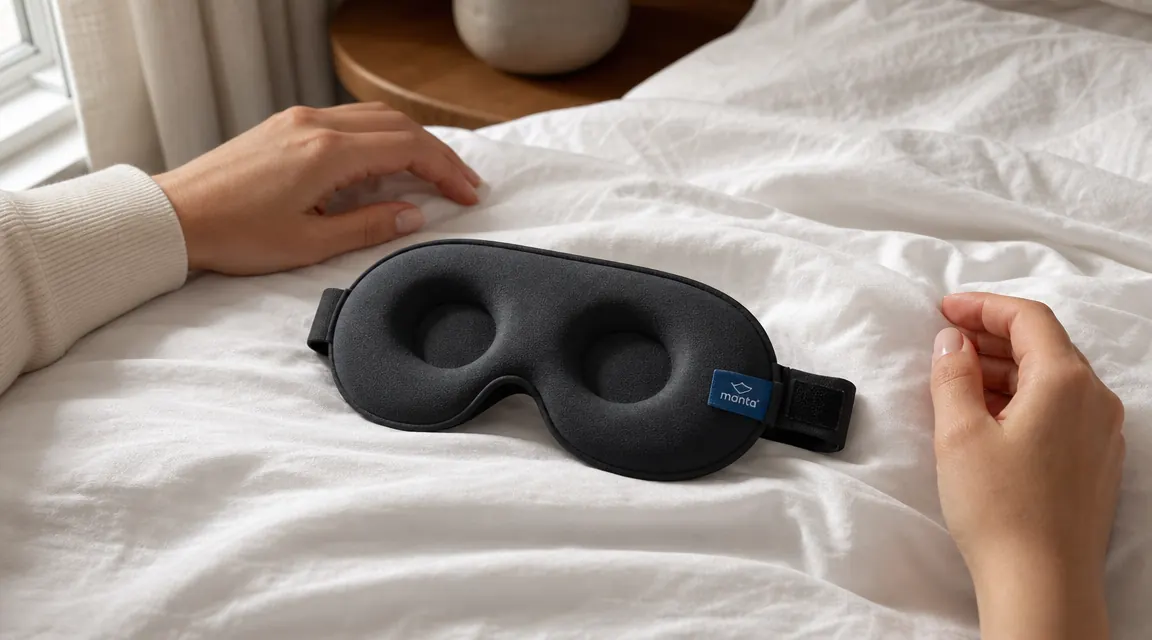
Before I get into the problems, it would be dishonest to skip what the Manta does genuinely well. The adjustable eye cups, which slide independently along the mask body, create a light seal that is meaningfully better than anything in the flat-fabric category. When I position them correctly as a back sleeper, there is zero light bleed. None. I have tested this by lying down with a bedside lamp on at full brightness and seen complete darkness. That is not a small achievement. Most masks either press on your corneas or leave a crescent of light at the nose bridge. The Manta does neither.
The foam on the eye cups is dense without being stiff. I can open my eyes fully under the cups without feeling any pressure on my eyelashes, which matters more than you might think if you have ever woken up with a flat-mask red mark across your lids. The outer shell is breathable enough that I do not notice heat building after an hour. For a structured mask at this price point, those are the right problems to have solved. I just wish the product were better at communicating who it is actually designed for.
The Side-Sleeper Problem Nobody Puts in the Top Review
Here is the thing about the adjustable eye cups. They slide. That is the feature. The problem is that they keep sliding when your face is pressed against a pillow at 2am. If you are a consistent back sleeper, this is not relevant to you. But if you start on your back and migrate to your side over the course of the night, or if you are a committed side sleeper who tried the Manta anyway because the reviews were so enthusiastic, you are going to find one cup migrated toward your temple by morning. The light seal breaks. The darkness is gone. And you are awake.
I tested this deliberately. I put the mask on, positioned the cups correctly, and rolled to my side. The pillow contact pushed the lower cup up and inward within about thirty seconds. It did not completely unseal immediately, but by the time I had been lying still on my side for ten minutes, light was definitely coming in at the lower cup edge. For people who naturally drift to one side during the night, this is not a minor complaint. It is the central complaint. Manta does make a side-sleeper variant called the Manta PRO, which addresses this with a different cup construction, but that is a separate product at a higher price. The Original is primarily designed for back sleepers, a fact that is present in the fine print and almost entirely absent from the marketing imagery.
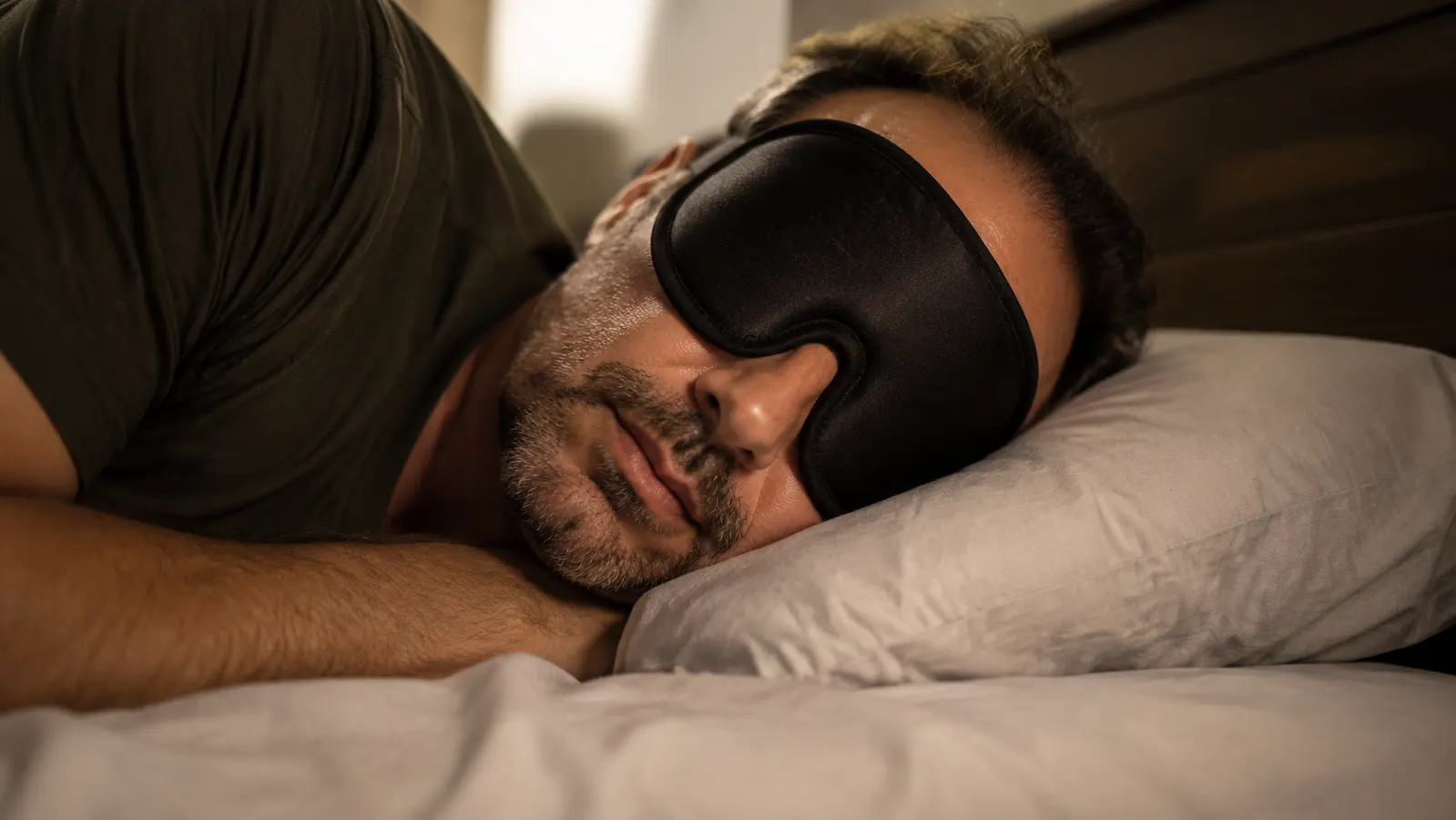
I put the mask on, positioned the cups correctly, and rolled to my side. The pillow contact pushed the lower cup up and inward within about thirty seconds.
The Strap Situation, Especially If You Have Fine Hair
The strap is a wide elastic band with a velcro closure at the back. It holds the mask firmly, which is good. The velcro, however, is the kind that will find every fine hair within an inch of it. I have medium-length hair and I learned on night three to tuck everything well clear of the closure before putting the mask on. I also learned, less pleasantly, that if you adjust the mask in your sleep and the velcro touches your hair, you will wake up because it will pull. This is not a design flaw so much as a standard velcro reality. But if you have fine or fragile hair, or if you sleep with your hair loose, it is worth knowing before you commit to the purchase.
The strap does stretch over time. I have been using mine for about four months now and the fit at the same velcro position is noticeably looser than it was in week one. It still holds, and I have moved the closure tighter, but the elasticity has declined. At this price point I would expect the strap to last longer, or I would expect Manta to sell replacement straps more visibly. They do exist as accessories, but you have to look for them.
The Price vs. a Ten-Dollar Mask Conversation
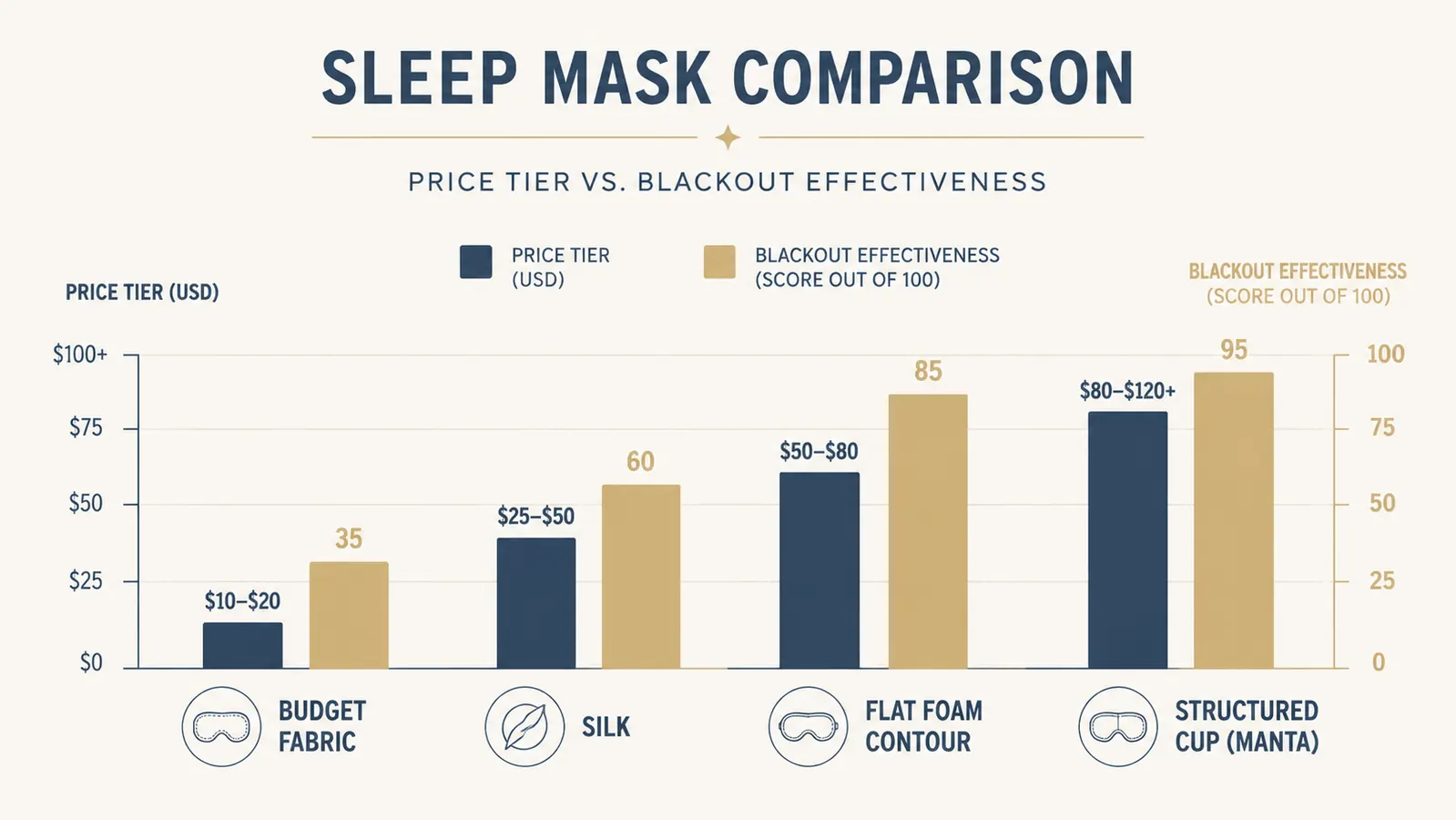
I want to be direct about the economics here. The Manta Original costs roughly four times what a basic contoured foam sleep mask costs on Amazon. In some sleep categories, a four-times price premium means a four-times better product. In this case it means a better product, but the gap depends entirely on your sleep position and how much you move around.
If you are a back sleeper who barely moves and you have been tolerating a budget mask that leaks light at the nose bridge, the Manta upgrade is real and you will feel it. If you are a side sleeper who bought the Manta because the reviews convinced you, you may find yourself with a very expensive mask that lets in light all night because the cups have shifted. The honest math is this: the Manta earns its price premium for back sleepers and fails to earn it for side sleepers, not because it is badly made, but because the product was designed around a specific sleep position that is only half of the sleeping population.
The Learning Curve: Two Weeks Before It Gets Good
One thing the reviews undersell is the adjustment period. The Manta is not a mask you put on once and immediately have the perfect experience. Positioning the cups correctly takes practice. Getting the strap tension right without making it too tight takes a few nights of iteration. And getting comfortable with something sitting on your face, even without pressing your eyes, takes a few nights of your brain accepting it as normal rather than novel and irritating.
I would say my first four nights were worse sleep than before I used any mask. By night seven I had the positioning dialed in. By night fourteen it felt normal. People who return the Manta within the first week are often returning a mask they never actually gave a chance to work. At the same time, people who return it after three weeks because the side-sleeper cup shift is driving them crazy have a completely legitimate grievance. Those are two different populations with two different problems, and the reviews tend to blend them together.
What I Liked
- Genuine zero-light-bleed performance when positioned correctly for back sleeping
- Eye cups float above the lashes with no pressure, even with eyes open underneath
- Breathable outer shell, runs cooler than most structured masks
- Cup position adjusts independently so you can dial in asymmetric faces
- 4.5-star rating across 15,000+ reviews reflects real back-sleeper satisfaction
Where It Falls Short
- Eye cups shift on pillow contact, breaking the light seal for side and stomach sleepers
- Velcro strap snags fine hair and requires deliberate hair-clearing each night
- Strap elastic loosens noticeably over 3-4 months of nightly use
- Price premium over budget contour masks only pays off for back sleepers
- Two-week learning curve before cup positioning becomes second nature
What About Glasses Wearers and People With Deep-Set Eyes?
Two specific populations come up repeatedly in the Manta reviews and both deserve a direct answer. First, glasses wearers. You cannot wear glasses under the Manta. The cups create a seal that does not accommodate frames. This is obvious in retrospect but I have seen enough reviews from people who hoped otherwise that it is worth stating clearly. Contact lenses are fine. Glasses are not.
Second, people with deep-set eyes or pronounced brow ridges sometimes find the cup seal works better for them than for people with more forward-set eyes, because the cup has more facial architecture to rest against. If you have been frustrated by flat masks that still let in light at the brow, the Manta cup construction may actually address your specific problem better than it does for average-face geometry. This is one case where the premium is easier to justify.
Who Returns This Mask and Why
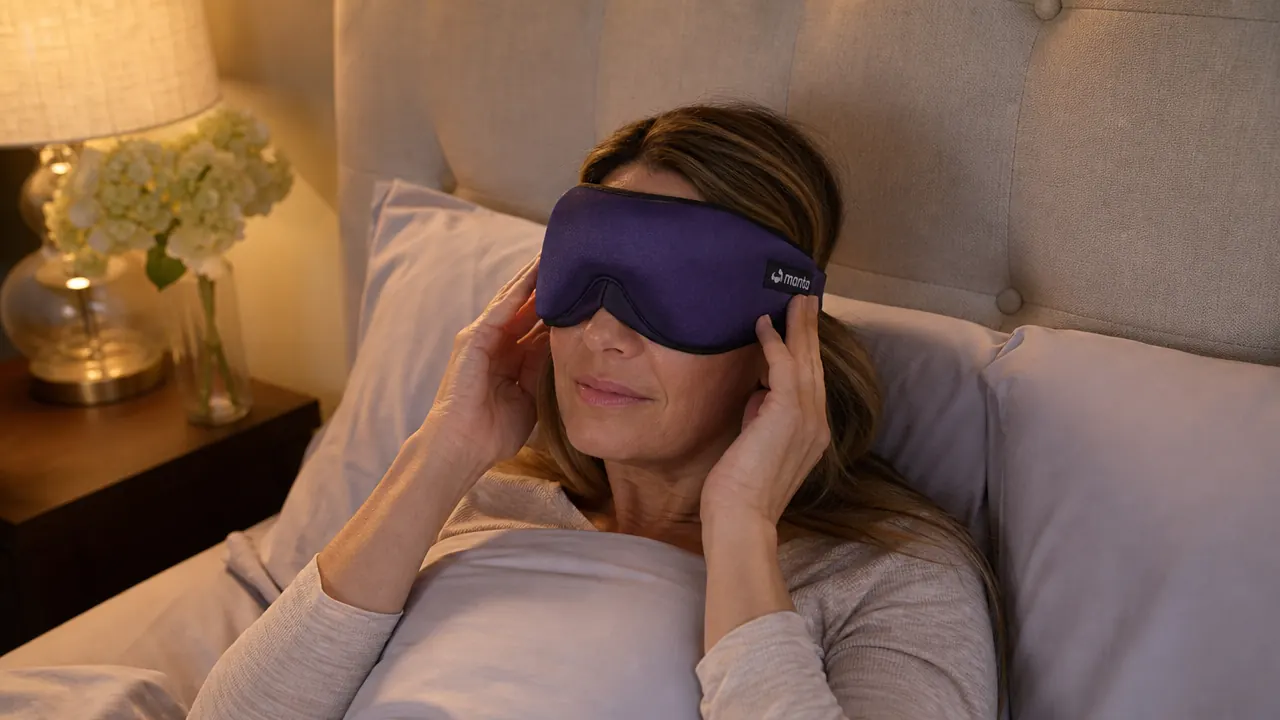
Looking at the critical reviews, which I read carefully before writing this, the patterns are consistent. The largest return group is side sleepers who found the cups shifted during the night and the seal broke. The second group is people who found the strap too tight or too loose and could not find a comfortable middle setting, which often correlates with smaller or larger head circumferences at the ends of the distribution. The third group is people who experienced the velcro-hair issue and found it annoying enough to return the product.
What is notably absent from the return reviews is complaints about build quality, smell, or the eye cup foam itself. The negative reviews are almost universally fit complaints, not construction complaints. That is actually a somewhat optimistic finding because it means the mask is well-made. The failures are about match to sleep position, not about the product being cheaply constructed.
Who This Is For
The Manta Original is genuinely the best sleep mask I have tested for a specific person: a back sleeper who moves minimally during the night and has been living with light leakage from a flat fabric or foam mask. If that describes you, especially if you have a street light situation, a partner who reads with a lamp on, or an east-facing bedroom with early sunrise, the Manta will solve your problem in a way that a ten-dollar mask genuinely cannot. The zero-pressure eye cup construction is also legitimately useful for anyone who has given up on masks because they hated the feeling of fabric on their lashes or corneas.
Who Should Skip It
If you are primarily a side sleeper, look at the Manta PRO variant, which has a different cup design intended to maintain the seal under pillow pressure. If you are a stomach sleeper, I would honestly suggest starting with a much cheaper contour mask to confirm you can sleep in a structured mask at all before spending on the Manta. If you have fine hair and you know velcro is a problem for you, factor in the nightly strap-management routine. And if you are on the fence purely on price, the honest answer is that the gap over budget masks is justified only if back sleeping is your consistent position throughout the night.
For a deeper look at how the Manta compares directly against the Alaska Bear silk mask, which is the best budget alternative I have found, see our Manta vs Alaska Bear comparison. And if you want to understand how mask fit interacts with your broader light-blocking setup, our guide on using a blackout sleep mask correctly covers positioning, pairing with curtains, and the common mistakes that undermine an otherwise good mask.
If you back-sleep and light is what's waking you, the Manta is the fix.
It costs more than a budget mask, and it earns that cost for the right sleeper. Check today's price on Amazon and read the sizing note on the product page before ordering if you have a smaller or larger head.
Amazon Check Today's Price on Amazon →